



How Long Do Office Chairs Last in Real Workplaces?
A chair that still rolls can look serviceable long after it has stopped supporting the person sitting in it. For businesses planning an office fit-out, managing a growing team or replacing worn workstation seating, how long do office chairs last is a procurement question with real consequences for staff comfort, productivity, presentation and budget.
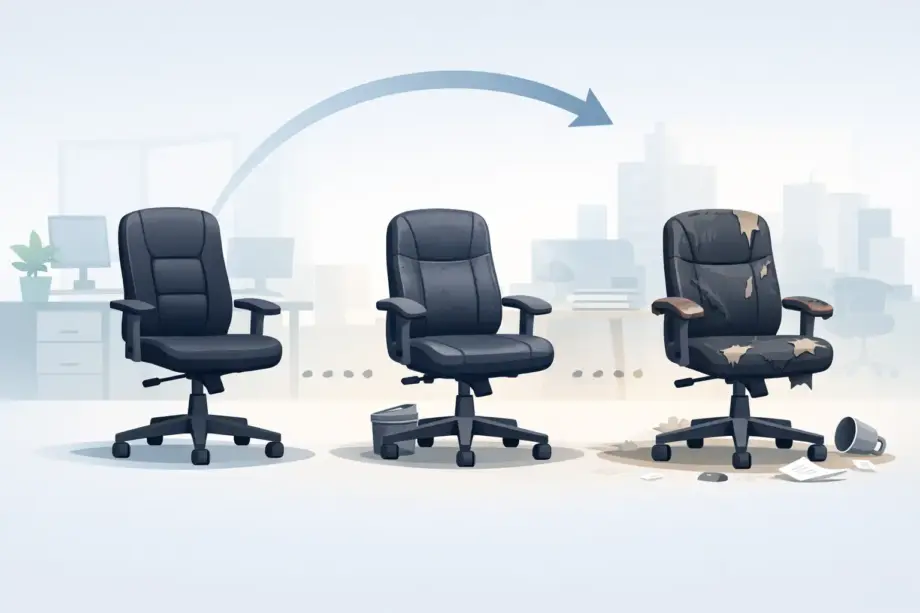
Most commercial office chairs last between five and 10 years. A well-built ergonomic chair in a light-use office may remain reliable for a decade or more, while seating used across shifts, in hot-desking areas or in customer-facing reception spaces may need replacement closer to the five-year mark. The useful lifespan is not just about whether the chair is intact. It is about whether its adjustment mechanisms, cushioning, base and upholstery still perform as intended.
How Long Do Office Chairs Last? It Depends on Use
The same chair can have a very different lifespan depending on who uses it and how often. A chair in a private office used for a standard workday experiences far less wear than one in a 24-hour operations centre, shared call centre or busy administration hub. Weight loads, frequent adjustments and movement across the floor all place pressure on components over time.
For a practical planning guide, expect budget or domestic-grade chairs to last around two to five years under regular business use. Quality commercial task chairs generally deliver five to 10 years, while premium ergonomic seating with replaceable parts can exceed 10 years when properly maintained. Warranty length is a useful signal of expected construction quality, but it should not be treated as the chair’s guaranteed service life.
A chair can also age unevenly. The fabric may still look presentable while the gas lift gradually drops, the armrests loosen or the seat foam loses its shape. For employers, these issues are more than cosmetic. A chair that no longer holds its adjustments may no longer suit the worker or the workstation.
What Wears Out First
Office chairs are made of moving parts, load-bearing parts and comfort materials. Each has its own wear pattern, and inspecting them individually gives a more accurate picture than judging the chair by appearance alone.
Gas lifts and height adjustment
The gas lift is the cylinder that raises and lowers the seat. When it begins to sink during use, will not hold the selected height or becomes difficult to adjust, it has reached the end of its useful life. In some commercial models, a compatible replacement gas lift can extend the chair’s service life. In others, replacement is the more cost-effective and safer option.
Castors and bases
Castors take constant punishment, particularly on rough carpet, uneven flooring or hard surfaces that collect grit. A chair that drags, rattles or rolls unpredictably can be fitted with new castors if the base remains sound. Cracks in a five-star base, however, are a clear replacement issue. The base carries the user’s weight and should never be treated as a minor repair.
Seat foam and upholstery
Compressed foam reduces support even when the fabric has no visible damage. Staff may report discomfort, feel pressure points or find themselves constantly shifting position. Upholstery can also show its age through thinning fabric, split vinyl, stains or frayed seams, especially in shared workspaces.
Mesh backs often retain a clean, contemporary look, but mesh can stretch and lose tension over time. Once the back no longer offers consistent lumbar support, it may not provide the ergonomic benefit it was selected for.
Armrests, tilt mechanisms and controls
Loose armrests, stiff levers and noisy tilt mechanisms are common signs of accumulated wear. These parts matter because office chairs are designed to be adjusted for different people and tasks. If staff cannot set the seat height, arm position, tilt tension or lumbar support correctly, the chair has lost much of its functional value.
The Factors That Shorten Chair Lifespan
Commercial seating works hard, and the environment can accelerate wear. A chair used by several people each day receives more adjustments, more rolling movement and more varied loading than a chair assigned to one employee. Hot-desking is efficient for floor space, but it calls for seating designed for high-frequency use.
Cleaning practices also matter. Strong chemicals can damage mesh, vinyl, plastics and metal finishes, while spills left unattended can stain upholstery or affect moving components. In hospitality-adjacent offices, reception areas and staff rooms, food, coffee and frequent visitor use make durable, easy-clean finishes particularly valuable.
Flooring is another overlooked factor. Soft carpet can strain castors, while hard floors can expose poor-quality wheels quickly. Matching suitable castors to carpet, vinyl, timber or tile helps reduce rolling resistance and limits unnecessary stress on the chair base.
Finally, choosing a chair outside its intended use category is a false economy. A light-use home-office chair may be appropriate for occasional remote work, but it is unlikely to deliver the same lifespan in a busy commercial office. The purchase price can be attractive, yet early replacements, staff complaints and inconsistent aesthetics across the workplace quickly erode the saving.
Signs It Is Time to Replace Office Chairs
Replacement should be considered before a chair fails completely. Waiting until seating becomes unusable often creates an urgent purchasing situation, limits choice and can leave teams working with mismatched temporary chairs.
Look for chairs that sink unexpectedly, wobble, crack, roll poorly or have damaged bases. Also pay attention to less obvious signs: flattened seats, stretched mesh, armrests that no longer adjust, controls that do not lock properly and recurring feedback about discomfort. If multiple chairs purchased at the same time are showing similar faults, it is sensible to assess the batch rather than replace units one by one.
Appearance matters in client-facing environments too. Worn, stained or mismatched chairs can undermine an otherwise polished reception area, meeting room or executive office. Replacing seating can be part of a broader workplace refresh that improves both employee experience and the visual standard visitors associate with the business.
Repair or Replace: Make the Commercial Call
A repair is worthwhile when the chair has a sound frame, base and mechanism, and the issue is isolated to a replaceable component such as castors or a gas lift. This approach can reduce waste and keep quality seating in service longer. It is especially practical for a uniform fleet of commercial chairs where spare parts are available.
Replacement makes more sense when several components are worn, structural elements are damaged or the chair no longer meets the needs of the team. It may also be the better decision when repair costs, labour and downtime approach the cost of a new chair with a full commercial warranty.
For larger offices, keep a simple asset register that records purchase dates, chair models, warranty details, repair history and location. This allows facilities teams and office managers to forecast replacements rather than react to failures. Staggered replacement can spread cost across financial periods, while a full replacement may be more efficient during a relocation, fit-out or office expansion.
Choose Chairs That Last Longer
The longest-lasting chair is not automatically the most expensive one. It is the chair specified for the workload, users and workspace. Look for commercial-grade construction, a stable five-star base, quality castors, durable upholstery or mesh, and adjustment features that employees will genuinely use. Consider the chair’s weight rating and whether the supplier can provide clear warranty and after-sales support.
Ergonomic adjustment is also a durability issue. When a chair can be correctly set up for its user, it is less likely to be forced into uncomfortable positions or used beyond its design intent. In shared offices, intuitive controls and a broad adjustment range help each person achieve a workable setup without excessive fiddling.
Furniture Pro Australia supplies office seating suited to practical commercial requirements, from task chairs for everyday workstations to executive, visitor and meeting room seating. Selecting a consistent range can simplify future ordering, maintain a cohesive look and make it easier to manage replacements as the business grows.
A well-chosen office chair should support the workday without drawing attention to itself. Review your seating before discomfort, visible wear or mechanical faults become the norm, and treat replacement as a considered investment in a safer, more professional workplace.