



Commercial Storage Cabinets for Better Workspaces
A cluttered storeroom, crowded reception desk or overloaded staff area does more than look untidy. It slows service, makes stock harder to find and leaves a poor impression on staff and visitors. The right commercial storage cabinets create a place for the equipment, documents and supplies that keep a business moving, while supporting a more polished and functional fit-out.
For offices, hospitality venues, clubs and professional spaces, storage should be specified with the same care as desks, seating and tables. A cabinet needs to suit its location, carry its intended load and work with the pace of the operation. The best choice is rarely just the largest unit available. It is the one that gives your team fast access to what they need without taking over valuable floor space.
Start with how the cabinet will be used
Before comparing finishes or dimensions, identify what will live inside the cabinet and who needs access to it. This simple step prevents a common purchasing problem: choosing a stylish unit that is too shallow for folders, too light for equipment or too exposed for confidential material.
In an office, commercial storage may hold lever arch files, stationery, printer supplies, technology or personal items. A reception area might need enclosed storage for paperwork, visitor materials and spare consumables, while a staff kitchen needs practical cupboards for mugs, dry goods and cleaning supplies. In a café, restaurant or club, back-of-house cabinets can organise tableware, packaging, point-of-sale supplies and operational essentials away from customer view.
Access matters just as much as capacity. Frequently used items should sit between waist and shoulder height where possible. Heavier goods are safer and easier to manage in lower cupboards or drawers. Items accessed only occasionally can be stored higher up, provided the cabinet design and surrounding space allow staff to reach them safely.
Choosing commercial storage cabinets by location
Different zones place different demands on furniture. A cabinet that works well in a private office may not be appropriate beside a busy pass, in an open-plan workspace or in a customer-facing foyer.
Office work areas and shared workstations
Office storage should reduce visual noise without making daily work inconvenient. Low credenzas and mobile pedestals are useful near desks, giving employees a dedicated place for documents and personal belongings. Taller cabinets make better use of wall space where floor area is limited, particularly in administration rooms, print stations and shared storage areas.
Consider whether the cabinet needs doors. Open shelving is quick to access and can work in a well-managed office, but enclosed units create a calmer appearance and protect supplies from dust. Lockable doors or drawers are the more suitable option for personnel files, financial records, keys and company devices.
For open-plan offices, visual consistency is valuable. Matching cabinetry with desks, workstations and meeting-room furniture helps a larger fit-out feel deliberate rather than pieced together over time. Neutral finishes are often the practical choice, although timber-look storage can bring warmth to client-facing rooms and executive spaces.
Hospitality and venue back-of-house areas
Hospitality storage works hard. Staff may open and close cabinet doors constantly during a service period, and the surroundings can include spills, heat, cleaning products and tight walkways. Prioritise easy-clean surfaces, durable hardware and a layout that keeps essential stock close to the point of use.
A freestanding cabinet can suit a flexible storeroom or staff area, while fixed cabinetry may make better use of an awkward alcove. Allow adequate clearance for doors and drawers, especially where staff pass each other carrying trays, boxes or glassware. A cabinet that blocks a walkway will soon become a daily frustration, no matter how much it stores.
For customer-visible zones, storage should support the venue aesthetic as well as the operation. A well-proportioned buffet cabinet, host station or credenza can conceal spare menus, cutlery, service items and technology while maintaining a clean, considered front-of-house presentation.
Reception, meeting rooms and client areas
In public-facing spaces, cabinets have a dual role. They need to conceal everyday business essentials, but they are also part of the visual experience for customers, guests and clients. A quality cabinet can anchor a reception wall, provide a surface for displays or refreshments, and keep the area free of loose boxes and exposed cables.
Choose finishes that sit comfortably with the broader interior scheme. A contemporary office may favour clean white or charcoal cabinetry, while a hospitality-inspired reception can benefit from timber tones or textured details. The trade-off is maintenance: very dark gloss surfaces may show fingerprints, while pale finishes can reveal scuffs in high-traffic areas. Selecting a finish with a practical surface texture often delivers the best balance.
Material, construction and durability
Commercial furniture is expected to perform over years of daily use, not simply look good at installation. Cabinet construction affects stability, load capacity, maintenance and long-term presentation.
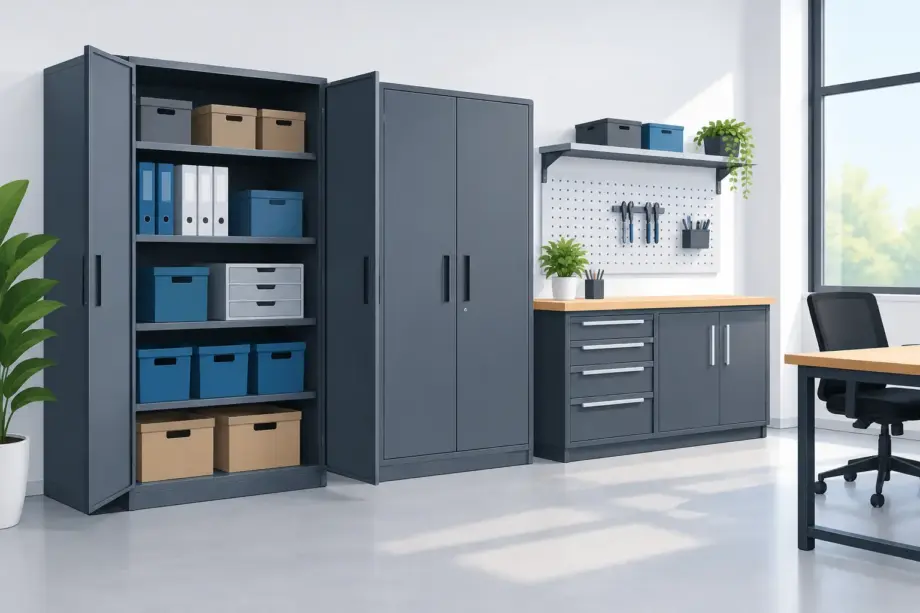
Steel cabinets are a strong option for utility rooms, archives, workshops and secure storage. They are generally easy to clean, suitable for heavier contents and often available with lockable doors. Their more industrial appearance may be less suited to premium customer areas unless the broader design calls for it.
Melamine and laminate cabinetry are widely used across offices because they offer a broad choice of finishes and a clean, professional appearance. Quality edging, solid back panels and reliable hinges make a meaningful difference to how these cabinets perform over time. For commercial use, avoid treating a light-duty flat-pack cabinet as a permanent solution in a high-use shared area.
Timber-look finishes can deliver warmth without the maintenance demands of solid timber. They work particularly well in boardrooms, reception spaces and hospitality venues where storage must complement the furniture rather than disappear into the background. Check that the cabinet is suitable for the environment, particularly where moisture, food service or frequent cleaning are factors.
Whatever the material, inspect the practical details. Adjustable shelves allow the cabinet to adapt as stock changes. Soft-close hinges reduce noise in quiet offices and meeting areas, although they may not be essential in a busy storeroom. Level-adjustable feet are useful on uneven floors, while quality handles and locks matter in spaces where doors are opened all day.
Measure the room, then measure the workflow
A cabinet dimension on a product page does not tell the whole story. Measure the available wall space, but also account for door swing, drawer extension, skirting boards, power points and nearby furniture. If the cabinet sits behind a desk or counter, confirm that staff can open it without needing to move chairs or interrupt a colleague.
Think about delivery access as well. Large commercial storage cabinets need to travel through entry doors, lifts, corridors and stairwells before they reach the room. For upper-level offices or constrained sites, check access points early in the procurement process. A modular or smaller-footprint solution may be more practical than one oversized unit.
Capacity should be planned realistically. It is tempting to buy storage based only on current requirements, but businesses accumulate supplies, files and equipment quickly. Allowing some spare capacity can prevent a fresh fit-out from becoming overcrowded within a year. That said, oversized cabinets can make a compact room feel heavy and waste valuable floor area, so scale still matters.
Build a more efficient storage plan
A cabinet performs best as part of a clear system. Group items by function rather than storing whatever fits in the nearest empty shelf. Keep print supplies together, place cleaning items in a separate area, and allocate secure compartments for sensitive documents or higher-value equipment. Labels are simple but worthwhile in shared spaces, particularly where casual staff or multiple teams access the same supplies.
For larger offices and venues, combine cabinet types rather than relying on one all-purpose unit. Low storage can support work surfaces and customer areas, tall cupboards can manage bulk supplies, and lockable pedestals can provide individual security at desks. This approach distributes storage closer to where it is needed and reduces unnecessary movement through the workplace.
Furniture Pro Australia offers commercial furniture options designed for operational spaces, with Australian-held stock, delivery support and product choices suited to office, hospitality and venue fit-outs. When timelines are tight, confirming stock availability, dispatch expectations and the required assembly level should form part of the decision alongside style and price.
The most effective storage is the kind staff barely have to think about: supplies are where they should be, customer-facing areas stay composed, and the furniture continues to look the part after a busy week. Choose cabinets around real tasks, real access conditions and the finish your space deserves, and they will support the way your business works every day.