



Hotel Lobby Furniture Guide for Australian Venues
A lobby is where guests decide how they feel about a property before they receive a key, order a coffee or speak to reception. This hotel lobby furniture guide helps venue operators, project managers and fit-out teams select furniture that looks considered, performs under constant use and supports a smoother arrival experience.
The best lobbies do more than fill an impressive footprint. They give guests an obvious place to pause, meet, wait, work or reset after travel. Getting the furniture mix right means balancing visual impact with circulation, cleaning requirements, luggage traffic and the day-to-day realities of a busy hospitality operation.
Start with the lobby’s operational role
Before choosing a lounge chair or specifying a coffee table, define what the space needs to do. A boutique hotel reception may need intimate seating that reinforces a distinctive design story. A city business hotel may require practical waiting zones, charging access and occasional work settings. A resort lobby often needs generous, relaxed furniture groups that can handle families, bags and guests moving between indoor and outdoor areas.
Reception position matters just as much as furniture style. Guests should be able to identify the check-in point quickly, without feeling funnelled through a crowded seating area. Keep a clear path from entry to reception, lifts, amenities and luggage storage. Furniture should frame that movement rather than compete with it.
It also pays to plan for peak periods, not just the quiet moments. Check-out queues, tour groups, conference arrivals and wet-weather crowding can put a lobby under pressure. Flexible occasional seating and compact tables help the area adapt without making it feel overfurnished every day.
Choose seating for comfort, scale and turnover
Lobby seating should look inviting from the entrance and remain comfortable long enough for guests waiting on rooms, transport or companions. That does not always mean selecting the deepest lounge available. Very low, soft seating can suit a design-led lounge zone, but it may be difficult for older guests or travellers carrying bags to use comfortably.
A layered mix generally works best. Two- and three-seat lounges establish the main seating groups, while occasional chairs provide flexible positions around coffee tables or near windows. Ottomans can offer extra seating and soften the room, although they are less useful where guests need back support for extended waits. For compact lobbies, tub chairs and armless lounges can preserve a generous feel without consuming valuable circulation space.
Consider seat height, back support and armrests as commercial decisions, not minor details. Chairs with a practical seat height and supportive arms suit a broader range of guests and are easier to get in and out of. In a lobby used by corporate travellers, a firmer upholstered chair may be more appropriate than a low, residential-style occasional chair.
Build furniture groups, not a row of seats
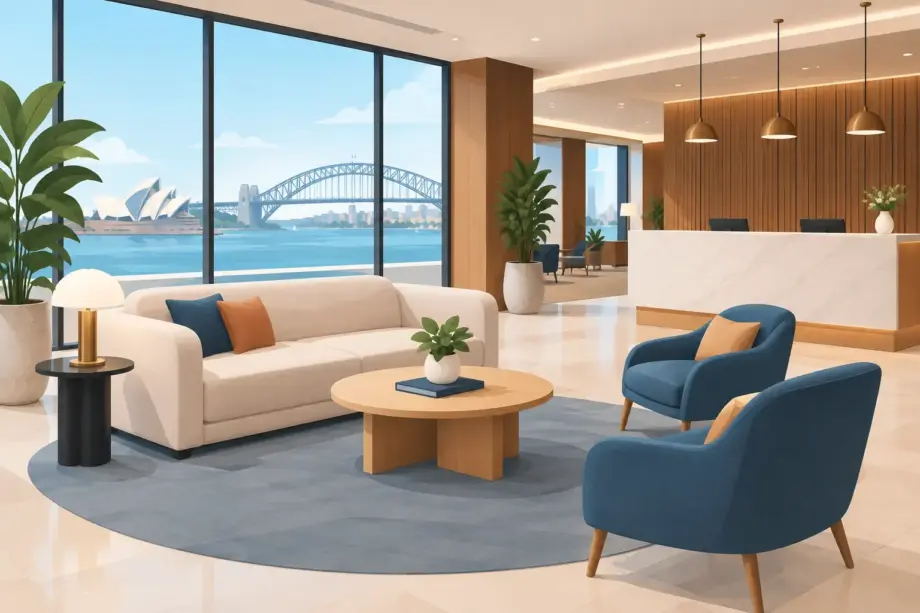
Rows of identical chairs against a wall can make a lobby feel like a waiting room. Instead, organise seating into small groups with a clear purpose. A lounge with two armchairs and a central table creates a social setting. A pair of chairs with a side table can serve guests taking a phone call. A bench near the entrance may give guests a quick place to sit while waiting for a taxi.
Leave enough clearance around every group for luggage, prams, mobility aids and staff movement. Coffee tables need to be close enough to use, but not so close that guests have to navigate around them. In high-traffic zones, side tables are often the more practical choice because they keep the central floor area open.
Select commercial materials that suit the setting
A hotel lobby is a public, high-contact environment. Materials need to withstand repeated cleaning, suitcase wheels, food and beverage spills, sunlight and frequent guest turnover. The most attractive finish is not always the right finish if it requires delicate maintenance or shows marks after a busy weekend.
Commercial-grade upholstery should be selected with cleaning and durability in mind. Performance fabrics can bring warmth and texture while standing up to regular use. Vinyl or quality commercial faux leather can be a strong option for areas where spills are likely and quick wipe-downs are essential. Textured fabrics and mid-tone colours are often more forgiving than pale, flat finishes, particularly near entries and café counters.
Timber furniture adds warmth and a premium hospitality character, but the finish must suit the workload. Sealed tops are generally easier to maintain than raw or heavily textured timber. Metal frames offer reliable strength and can work across contemporary, industrial or refined interiors depending on the profile and finish. Stone-look, laminate and compact surfaces can also provide a polished look with practical resistance to moisture and daily wear.
Where natural light is strong, check how fabrics and finishes will perform over time. UV exposure can fade upholstery and timber tones, while highly reflective surfaces may create glare for reception staff and seated guests. Materials should support the atmosphere you want without adding avoidable maintenance demands.
Match tables to how guests use the space
Tables turn a lobby from a pass-through area into a usable guest space. Coffee tables suit lounge clusters and give guests somewhere to place a drink, room key or laptop. Side tables are useful beside occasional chairs and can be moved as layouts change. Console tables behind lounges can add a design layer while offering a convenient surface for styling or guest information.
Height is central to usability. A coffee table should sit comfortably below or close to lounge seat height, while a side table should be easy to reach from an armchair. If guests are likely to work in the lobby, include some higher tables with dining-height chairs or stools. These settings can support short laptop sessions and casual meetings better than a low lounge arrangement alone.
Avoid filling every seating zone with a large table. A crowded table layout creates pinch points and limits housekeeping access. One well-proportioned table per group is usually more effective than several small pieces competing for space.
Use layout to protect flow and create atmosphere
A strong lobby layout gives guests choices. They can sit near reception for a short wait, move to a quieter corner for a conversation, or settle into a comfortable zone away from the entry. This range makes the space feel considered and helps prevent one seating area from carrying every type of activity.
Anchor larger furniture groups with rugs where suitable, particularly in quieter lounge areas. Rugs define a zone and improve acoustic comfort, but they must be commercially appropriate, stable underfoot and easy to maintain. In busy entry paths or wet areas, hard flooring with loose furniture may be the safer option.
Do not overlook sightlines. Reception staff need a clear view of the entry and main seating areas, while guests should retain a visual connection to reception without feeling watched. Tall-backed furniture, oversized planters and screens can divide a large room effectively, but use them carefully so they do not create hidden corners or disrupt supervision.
Allow for power, cleaning and replacement
Power access has become a standard expectation in hotel public areas. Where practical, position lounge and work settings close to accessible charging points. Freestanding furniture gives flexibility, but it should not result in cords crossing guest pathways. Plan electrical requirements early with the wider fit-out team.
Housekeeping access also deserves attention. Furniture with adequate clearance below or around it is easier to vacuum and mop. Removable cushions, wipeable surfaces and replaceable components can reduce disruption when maintenance is needed. Choosing commercially supplied furniture with dependable stock availability can also make future additions or replacements far simpler than sourcing a close match years later.
Set the right visual tone without sacrificing usability
Your lobby furniture should align with the property’s positioning. A coastal resort may favour soft curves, timber accents and relaxed upholstered seating. A premium apartment hotel may use refined occasional chairs, streamlined lounges and sculptural tables. A conference-focused property may benefit from more upright seating, practical work tables and finishes that remain smart under heavy weekday use.
Consistency is more valuable than matching every item exactly. Repeat a finish, upholstery tone or shape across different furniture types to create cohesion. Then introduce contrast through texture, scale or a feature chair. This approach gives the lobby personality while keeping procurement and future replacement decisions manageable.
For projects requiring multiple categories, Furniture Pro Australia can help simplify selection across commercial lounges, chairs, stools, tables and outdoor pieces. Coordinating the furniture package early helps maintain a consistent look from the lobby through to dining, conference and terrace areas.
A practical hotel lobby furniture checklist
Before placing an order, confirm that the selected pieces suit the actual lobby plan, not just a showroom setting. Check clearances around reception and entry routes, confirm table heights against seating, and review fabric and finish samples under the lobby’s real lighting.
Also confirm lead times, available stock, warranty coverage, delivery access and installation requirements. Large lounges, table bases and bulky reception-area furniture may need to move through lifts, loading docks or narrow service corridors. Measuring these routes early avoids costly surprises on delivery day.
A well-furnished lobby should make guests feel looked after without making the operation harder for staff. Choose pieces that invite people to stay, give the room a clear sense of place and are ready to perform through every arrival, departure and busy service period.