


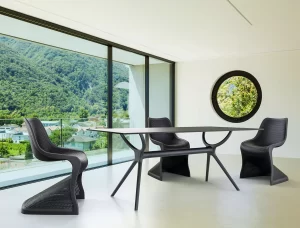

Choosing a Wheelchair Accessible Cafe Table
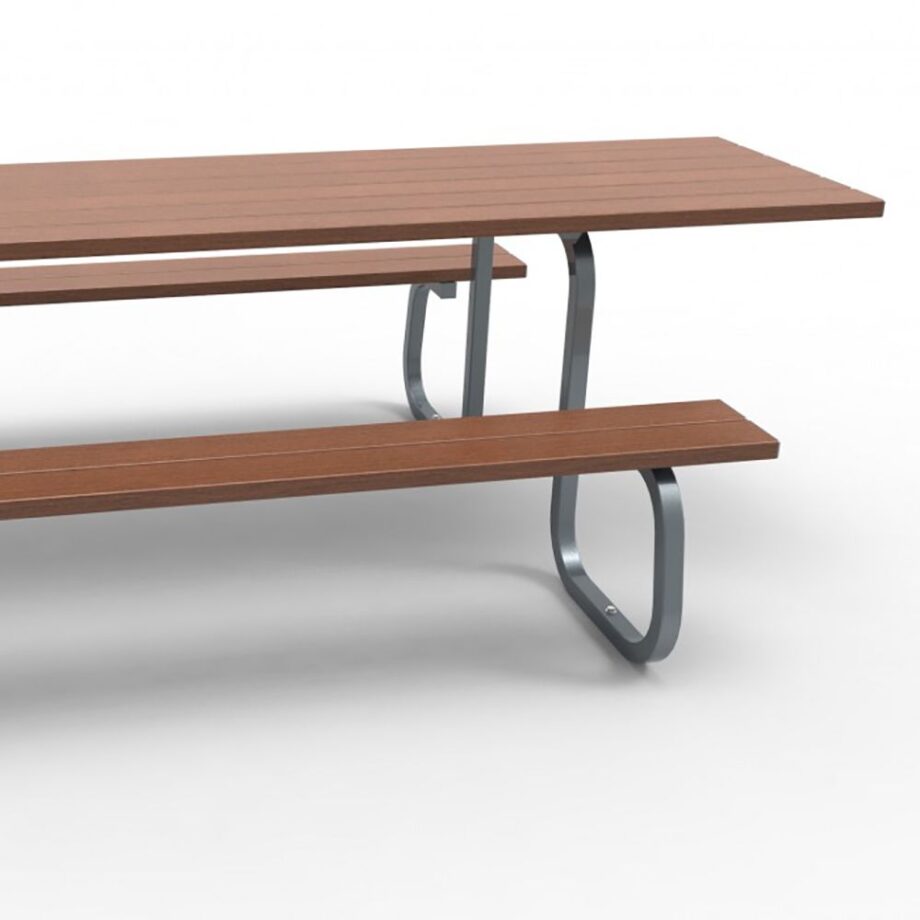
A wheelchair accessible cafe table is rarely the feature customers mention out loud, but they notice it straight away when it is missing. In a hospitality setting, table access affects comfort, dwell time, group seating and whether a venue feels genuinely welcoming or simply compliant on paper. For café owners, venue managers and fit-out teams, that makes table selection a practical business decision as much as a design one.
What makes a cafe table wheelchair accessible?
At a basic level, a wheelchair accessible cafe table needs enough clear space underneath for a seated user to roll in comfortably and sit close to the tabletop without knocking knees, footplates or armrests. That sounds straightforward, but in commercial furniture, the details matter. A table can look generous from above and still fail in use because the base intrudes too far into legroom or the apron sits too low.
The most workable option is usually a table with a stable central base or a design that keeps support legs well out of the user zone. Pedestal bases often perform better than four-leg tables in this setting, provided the base plate itself does not create a trip hazard or block wheelchair footrests. The tabletop height also needs to feel natural for both wheelchair users and ambulant guests, especially in mixed seating areas where one table may need to serve a broad range of customers.
Accessibility is not just about one dimension. It is about how the table functions in a real service environment, with chairs being moved, bags placed underneath, and staff circulating through the space.
Why accessible tables matter in a commercial venue
For hospitality operators, accessible furniture supports more than compliance. It affects how easily guests can join a group, whether prams and mobility aids can share the same zone, and how comfortably customers stay for a second coffee or a longer lunch. A table that works well removes friction. A table that does not work forces awkward rearranging by staff and creates an experience customers remember for the wrong reasons.
There is also a visual and operational benefit in choosing accessible tables that match the rest of the fit-out. Many venues still treat accessible seating as an afterthought, which is why the designated table often looks mismatched or sits in a poor location near a thoroughfare, service station or entrance. That approach solves a checklist item but weakens the customer experience. A better outcome comes from selecting commercial tables that meet access needs while still aligning with the venue’s material palette, base style and floorplan logic.
The dimensions that matter most
When comparing options, clearance underneath the table should be your first check. A generous tabletop means little if the structure underneath blocks forward access. The user needs space for knees and footrests, and that means paying close attention to the table support, any crossbars, and the depth of the base.
Table height matters too. Too low, and the tabletop feels cramped. Too high, and dining or laptop use becomes uncomfortable. In most café environments, standard dining height is appropriate, but the exact product specification still needs checking because not all commercial tables are built the same way.
Top size is the next decision. Smaller round tops can work well in compact venues, but if the table is intended for mixed groups, a slightly larger square or rectangular top may give better usability. The trade-off is floor efficiency. Larger tables improve comfort and flexibility, but they also reduce seating density. For busy cafés, that balance needs careful thought.
Wheelchair accessible cafe table options by venue type
A wheelchair accessible cafe table should suit the service model, not just the floorplan. In a quick-service café with high turnover, smaller pedestal tables can create accessible seating without slowing circulation. In an all-day dining setting, guests are more likely to stay longer, so comfort and generous clearance become more important than squeezing in one extra setting.
For indoor dining rooms, laminate and compact laminate tops are often a practical fit because they are durable, easy to clean and available in finishes that suit a broad range of hospitality interiors. In outdoor settings, weather-resistant materials matter just as much as access. The table still needs enough knee space, but it also has to handle sun, moisture and frequent movement.
Clubs, hotel cafés and larger venues may benefit from a mix of table formats rather than a single all-purpose solution. A combination of two-person and four-person accessible tables can make the space feel more natural, especially when these are distributed through the room instead of isolated to one corner.
Base design can make or break usability
This is where many buyers get caught. A table may have the right height and top size, but the wrong base design makes it hard to use. Cross-shaped bases, decorative frames and low support rails can interfere with footplates or limit how closely a wheelchair can approach.
A single central column is often the cleanest option, especially for round and square café tables. It can create better access from multiple sides and reduce the need for staff to shift furniture around. That said, base weight and diameter still matter. If the base is too wide, it can become an obstacle. If it is too light, stability suffers.
Four-leg tables are not automatically unsuitable, but they need more scrutiny. Leg placement, apron depth and overall stability all affect whether the table is genuinely practical. In commercial use, the best accessible solution is usually the one that balances clear legroom with enough durability for daily service.
Layout matters as much as the table itself
Even the right wheelchair accessible cafe table can underperform in the wrong location. If a guest cannot reach it easily because the aisle is too narrow or the surrounding chairs crowd the approach, accessibility is reduced before they even sit down. This is why table planning should happen alongside the broader seating layout, not after it.
Accessible tables should be positioned where circulation is easy and sightlines feel equal to the rest of the room. Guests should not feel parked beside a service path or cut off from the main dining area. Good placement also helps staff. Orders are easier to deliver, cleaning is simpler, and rearranging furniture becomes less frequent.
For fit-out projects, it is worth thinking about the full customer journey: entry, approach, seating, dining and exit. Accessibility is strongest when every step feels considered, not improvised.
Design should still feel cohesive
Commercial buyers often worry that accessible furniture will limit the look of the venue. In practice, the opposite can be true if the range is selected carefully. Many commercial table collections now offer enough variation in base finishes, top materials and sizes to support accessibility without breaking the visual scheme.
That means a venue can maintain a consistent look across indoor dining, breakout corners and outdoor areas while still incorporating tables that offer proper clearance. Timber-look tops, black powder-coated bases, stone-look surfaces and minimalist pedestal forms can all work in accessible applications, depending on the setting.
For brand-led hospitality spaces, consistency matters. Guests notice when one table looks like it belongs and another looks borrowed from a back room. Accessibility should be integrated into the design language, not treated as a compromise.
What to ask before you place an order
Before buying, check product specifications closely and look beyond the hero image. Ask for overall height, under-table clearance, base dimensions and any details that affect legroom. If the table is part of a coordinated range, confirm whether there are alternative top sizes or base options that improve access without changing the overall look.
It is also worth thinking about lead times, stock availability and replacement planning. Commercial venues need furniture that can be sourced reliably, especially if future expansion or replacements are likely. A good procurement outcome is not just about finding one suitable table. It is about choosing a solution you can maintain across the life of the venue.
For buyers furnishing multiple areas, sourcing through a supplier with commercial range depth can simplify the process. Furniture Pro Australia, for example, supports buyers who need hospitality-ready tables that balance design, durability and fast fulfilment from Australian-held stock.
Getting the balance right
The best wheelchair accessible cafe table is rarely the flashiest product on the floor. It is the one that fits the room properly, supports comfortable use, and looks like it was meant to be there from the start. In hospitality, that matters because good furniture should solve problems quietly while still lifting the overall presentation.
If you are reviewing your next café fit-out or replacing underperforming tables, accessibility is one of the smartest places to be precise. A well-chosen table improves the customer experience, helps staff work more efficiently and strengthens the professionalism of the space without drawing attention to itself. That is usually the strongest sign you have chosen well. Available at https://furniturepro.com.au/product/alfresco-2m-table-setting-wheelchair-accessible-surface-mounted/