



Reception Area Furniture Guide for Businesses
A reception is often judged before a visitor has spoken to anyone. Worn chairs, an oversized desk or a cramped waiting zone can make a capable business feel disorganised. This reception area furniture guide helps Australian businesses select commercial pieces that look considered, work hard and suit the way people actually move through the space.
Start with the reception area’s real job
Reception spaces vary significantly between a medical practice, corporate office, hotel lobby, club and showroom. Some need to process visitors quickly; others need to make guests comfortable while they wait, meet or browse. The furniture should support that purpose rather than simply fill an open area.
Begin by mapping the journey from entry to destination. Where does a visitor pause? Who needs a clear line of sight to the door? Is there a queue at peak times, or does the area need to accommodate people waiting for appointments? These questions determine the right mix of reception counters, lounge seating, occasional tables and storage.
A compact office reception may only require a practical desk, two or three visitor chairs and a small table. A larger venue may need several seating zones, a statement counter and durable furniture that can withstand constant use. Buying too much furniture can restrict circulation, while buying too little can leave the space looking temporary or uncomfortable.
Plan the layout before choosing furniture
The most attractive chair will not perform well if it blocks access or leaves guests sitting too close to a busy entry. Measure the room, including door swings, lifts, corridors, power points and any existing architectural features. Then allow clear paths between the entrance, reception desk, seating and internal work areas.
As a general working approach, keep major walkways open enough for visitors carrying bags, using mobility aids or moving alongside colleagues. Consider prams, wheelchairs and delivery trolleys where relevant. This is particularly important in healthcare, education, government and customer-service environments, where accessibility is part of a professional welcome.
Create zones, not rows of chairs
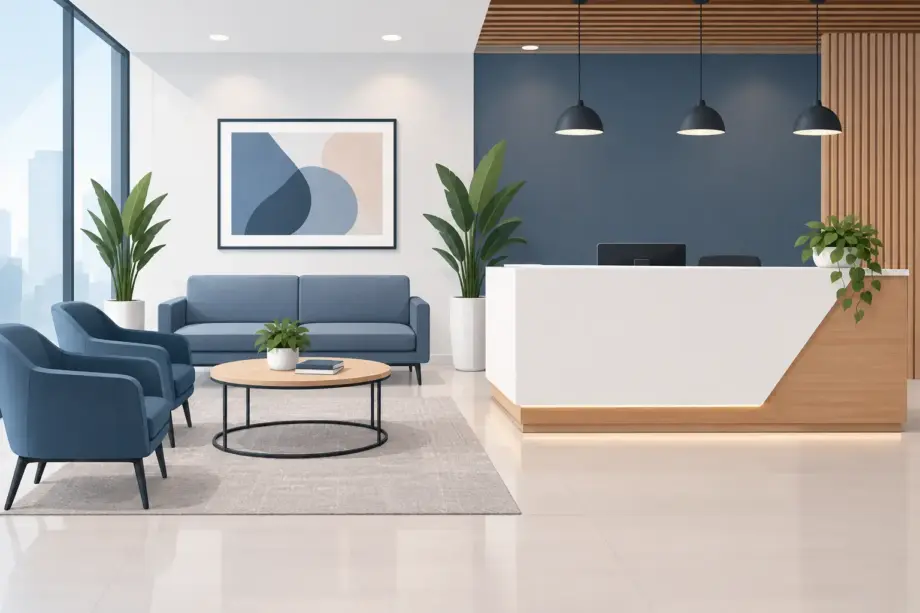
Rows of identical chairs can be efficient in high-turnover waiting rooms, but they are not always the best choice for office or hospitality settings. A combination of lounges, armchairs and side tables can create a more relaxed arrival experience and give visitors a choice of seating.
For a polished commercial look, group furniture by function. Place lounge seating where longer waits are likely, add occasional tables within easy reach, and position individual chairs where privacy or quick meetings matter. In busy areas, leave enough room between groups for cleaning and easy movement.
Keep the reception desk practical for staff
A reception desk is both a customer-facing feature and a workstation. Its size should reflect the number of staff, the equipment they use and the volume of visitor interaction. Screens, phones, EFTPOS terminals, printers, parcel storage and personal items all need a home without cluttering the customer-facing surface.
Consider desk height carefully. A raised counter can provide privacy and suit fast transactions, while a lower accessible section makes conversations more comfortable for a wider range of visitors. If staff spend most of the day at reception, pair the desk with ergonomic seating and plan for adequate legroom, cable management and nearby storage.
Choose seating built for commercial traffic
Reception seating receives a different kind of wear from boardroom or home furniture. Guests may arrive wet from the weather, place bags on seats, shift chairs across flooring and use the space throughout the day. Commercial-grade construction, stable frames and quality upholstery are worthwhile where the reception is in constant use.
Material choice depends on the setting. Vinyl and commercial fabrics are popular for their durability and straightforward cleaning, particularly in clinics, hospitality venues and public-facing offices. Leather-look finishes can create a refined appearance but should be selected with realistic expectations around maintenance and long-term wear. Timber, metal and polypropylene chairs suit many contemporary interiors and can be especially practical in high-turnover spaces.
Comfort still matters. A short-stay reception can use firmer chairs with compact proportions, while a professional services office or hotel-style lobby benefits from deeper lounge seating with supportive cushioning. Test the balance between comfort and capacity: generous lounges make an impression, but they take up more floor area than individual guest chairs.
Match furniture to your brand and interior
Reception furniture does not need to be overly decorative to make an impact. A consistent palette, complementary finishes and a clear focal point will usually feel more professional than a collection of unrelated pieces. Start with the fixed elements – flooring, wall colour, joinery and lighting – then select furniture that either blends with them or provides controlled contrast.
For a corporate office, clean-lined desks, upholstered visitor chairs and understated coffee tables can reinforce a confident, organised image. Hospitality venues may favour warmer timber tones, European-inspired seating or bolder upholstered lounges that encourage guests to linger. In industrial or trade environments, durable metal-framed chairs and practical storage may better reflect the operation.
Colour should be considered beyond appearance. Very pale upholstery may show marks quickly in a high-use lobby, while very dark finishes can make a small or poorly lit reception feel heavy. Mid-tones, textured fabrics and easy-clean surfaces often offer a sensible middle ground.
Do not overlook tables, storage and small details
Side tables and coffee tables make waiting more comfortable by giving visitors a place for a mobile, coffee cup, brochure or notebook. Choose stable bases and finishes suited to the traffic level. In compact receptions, nesting tables or small occasional tables can provide utility without making the room feel crowded.
Storage is equally valuable, even though guests may never see it. Concealed cabinets, credenzas and under-desk storage keep deliveries, stationery, marketing material and staff belongings out of sight. A tidy reception counter creates greater confidence than an expensive fit-out with paperwork piled in full view.
Lighting, plants and signage can complete the area, but furniture should remain the functional foundation. Avoid filling every spare corner with decorative items. Reception teams need room to work, visitors need somewhere to sit, and cleaners need clear access to floors and surfaces.
Buy for delivery, maintenance and replacement
Commercial furniture decisions are procurement decisions as well as design decisions. Before ordering, confirm stock availability, dispatch timing, delivery access and whether the items will fit through lifts, doorways and corridors. A large lounge or reception counter can be ideal on a floor plan yet difficult to install in an upper-level tenancy.
Ask about warranty coverage and care requirements, particularly for upholstered seating, moving mechanisms and frequently used office chairs. Choosing readily available commercial furniture can also make future expansion simpler. If your team grows or a matching chair needs replacing, an ongoing range reduces the risk of an uneven-looking reception.
For businesses furnishing quickly, Australian-held stock and dependable metro delivery can make the difference between opening on schedule and delaying a fit-out. Furniture Pro Australia offers commercial seating, reception-ready tables, office desks and storage options suited to businesses that need practical choices without losing the visual impact of a well-finished space.
A reception that earns its floor space
The right reception furniture should make arrivals easier for visitors and workdays easier for staff. Focus on circulation, commercial durability, comfort and a coherent look, then select pieces that suit the scale and pace of your operation. A well-planned reception does more than look welcoming – it quietly shows people that the business behind the desk is prepared, capable and ready to receive them.