



Outdoor Lounge Set Review for Commercial Spaces
A tired courtyard can cost a venue more than it first appears. When guests cannot settle comfortably, tables turn over too quickly, quieter trading periods feel emptier, and an otherwise polished fit-out loses its impact at the door. This outdoor lounge set review looks at what commercial buyers should assess before choosing seating for a café terrace, hotel pool deck, club balcony, office breakout area or residential development common space.
The right lounge setting is not simply the one that photographs well. It must suit the way people use the area, tolerate local weather, support your cleaning routine and continue looking presentable through busy service. For Australian operators, that usually means balancing visual warmth with materials that can handle UV exposure, rain, salt air, sunscreen and frequent movement.
What a Commercial Outdoor Lounge Set Needs to Deliver
Outdoor lounges create a different kind of seating zone from dining tables and bar stools. They encourage longer stays, casual meetings, pre-dinner drinks and relaxed poolside use. That can lift the perceived quality of a space, but only when the setting feels deliberate rather than like a few indoor sofas pushed outside.
Start with capacity and circulation. A compact two-seat lounge with matching chairs may work well in a boutique hotel courtyard or a sheltered office balcony. Larger modular settings are better suited to resort terraces, club courtyards and expansive hospitality venues, where groups need flexibility and staff need clear paths to move around them. Allow enough room for guests to sit down and stand up without clipping neighbouring tables, planter boxes or service routes.
Seat height also matters. Low-profile lounges have a relaxed, contemporary look and are particularly effective around pools or in premium leisure areas. They can be less practical for older patrons, all-day dining spaces or venues that need guests to transition easily between drinks and meals. A slightly higher seat with supportive cushioning will often offer the better commercial compromise.
Comfort should be tested beyond the first sit. Deep seats and soft cushions make an immediate impression, yet overly soft foam can lose shape or hold water if the cushions are not designed for outdoor conditions. Look for supportive cushioning, removable covers where appropriate, and quick-drying construction that reduces downtime after rain or cleaning.
Outdoor Lounge Set Review: Materials That Earn Their Place
Material selection determines how much attention a lounge set will need after installation. There is no single best option for every site. Exposure, maintenance capacity and the visual direction of the venue should guide the choice.
Aluminium for low-maintenance performance
Powder-coated aluminium is one of the strongest all-round choices for commercial outdoor furniture. It is comparatively lightweight, corrosion-resistant and straightforward for staff to reposition during cleaning or event changes. A quality frame feels stable without being cumbersome, and the powder-coated finish should be even across joins, corners and welded sections.
For coastal locations, aluminium remains a practical option, although salt residue should still be washed away routinely. Dark finishes can become hot in direct summer sun, while pale or neutral frames generally stay more comfortable and suit a broader range of outdoor palettes. Check that feet or glides are replaceable, especially on tiled terraces where furniture is moved regularly.
Timber for warmth, with a maintenance commitment
Timber lounge settings bring natural character to wine bars, garden venues and accommodation spaces. Teak and other outdoor-rated hardwoods can perform well when cared for properly, but they are not maintenance-free. Sun, moisture and hospitality cleaning products can alter the surface over time.
A weathered silver-grey finish may suit some projects, while others will want to maintain the original timber colour with scheduled oiling. The key is to decide this before purchase. If the venue does not have a realistic maintenance plan, a timber-look aluminium frame or another low-care material may deliver a more consistent result.
Wicker and woven finishes for relaxed hospitality zones
Synthetic wicker can soften hard landscaping and give a pool area, rooftop or resort courtyard a more relaxed feel. The quality difference is significant. Commercial-grade synthetic weave should be UV-stabilised, tightly finished and supported by a solid frame beneath it. Loose strands, brittle texture and exposed frame edges are warning signs that the piece may not cope with high use.
Woven furniture is best positioned where it can be visually appreciated without taking the full force of adverse weather. It is often a strong design choice for covered patios and semi-protected terraces, but a fully exposed rooftop may call for a simpler aluminium profile.
Upholstery and cushions need close scrutiny
Outdoor cushions are where appearance and operations meet. Fabric should resist fading and be suitable for regular cleaning, while the inner foam needs to dry efficiently. Decorative scatter cushions can make a setting feel more inviting, but they add collection, storage and replacement tasks for staff.
For busy venues, choose a cushion configuration that is easy to remove, identify and reinstall. Neutral fabrics are versatile, though very light colours can show food, makeup and sunscreen quickly. Mid-tones, textured weaves and replaceable cushion covers can offer a more workable balance between presentation and upkeep.
Consider the Site Before the Style
A lounge set that suits a covered café forecourt may be the wrong answer for an exposed apartment rooftop. Before finalising a selection, examine where the furniture will actually live throughout the year.
Direct afternoon sun affects both guest comfort and material longevity. Wind exposure changes the value of heavier frames and lower profiles. Nearby pools introduce chlorinated water, wet bathers and sunscreen, while coastal sites demand a disciplined approach to cleaning and corrosion prevention. Even drainage deserves attention. Furniture placed where water pools will wear faster and create a less inviting customer experience.
Commercial outdoor areas also need a storage plan. If cushions must come inside each evening, can staff do that quickly and safely? If furniture is stackable or modular, where will it be kept during functions or severe weather? A setting that appears efficient on a floor plan can become frustrating if it requires a storeroom you do not have.
Layout, Modularity and Day-to-Day Operations
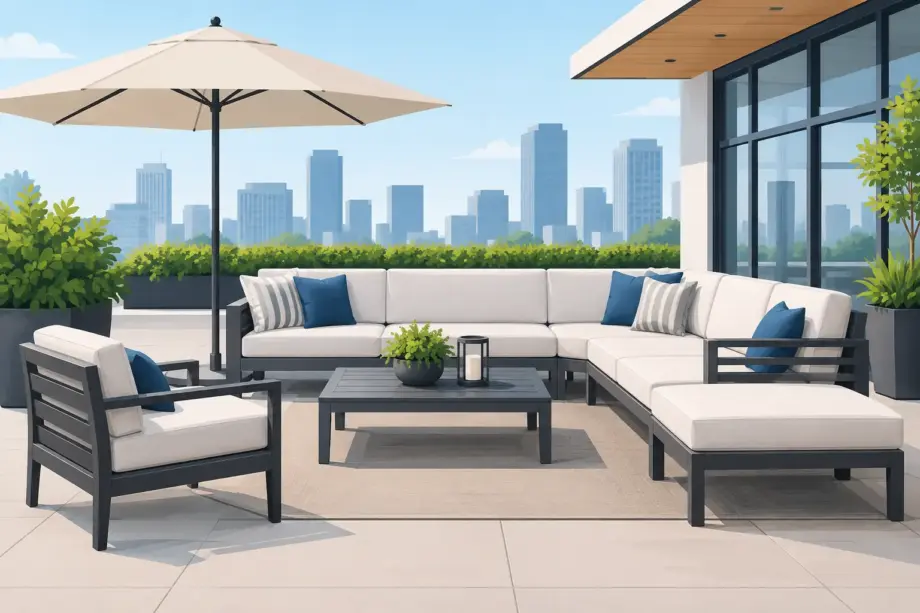
The strongest outdoor layouts give guests a sense of privacy while allowing the space to remain easy to manage. Rather than lining every lounge against a wall, use settings to create zones. A pair of lounge chairs with a low table can serve couples, while modular pieces can form larger conversation areas for groups.
Coffee tables should be sturdy enough for drinks, plates and shared snacks, not merely decorative additions. Their height should work with the lounge seat, and the base should not become a trip hazard for guests or staff. In a food-service environment, it is also worth considering whether the surface can be wiped down quickly between sittings.
Modular outdoor lounges bring useful flexibility, particularly for event venues and hotel spaces that host varying group sizes. Sections can be arranged as a long linear sofa, an L-shape or separate seating clusters. The trade-off is that more joins can mean more movement over time. Look for secure connectors and stable individual modules, particularly where the setting will be rearranged often.
For smaller commercial spaces, a compact lounge set with two chairs and a table can be more effective than an oversized sofa. It preserves circulation, makes cleaning easier and gives the area a considered feel without crowding it. Bigger is only better when the footprint and customer demand genuinely support it.
Durability Is More Than a Warranty Term
A commercial warranty is valuable, but it should be read alongside the expected use case. Furniture intended for occasional home entertaining may not withstand the daily movement, cleaning and customer turnover of a hospitality setting. Ask practical questions: are components replaceable, can cushions or glides be reordered, and is the frame suitable for the level of exposure at your site?
Construction details often tell the clearer story. Inspect welded joins, fastening points, the finish around corners, the tension of woven material and the firmness of cushions. A quality lounge set should feel stable when guests shift their weight, with no rocking or rattling on a level surface.
Furniture Pro Australia supports commercial buyers with outdoor furniture selected for operational spaces, backed by Australian-held stock, dispatch support and warranties that matter when projects have real opening dates. Availability is not a minor detail when a venue is waiting on a handover, seasonal launch or refurbishment schedule.
Making the Final Choice
The best outdoor lounge setting is one that matches the character of the venue while making service and maintenance easier, not harder. A coastal resort may prioritise corrosion resistance and quick-drying cushions. A city rooftop bar may need stable, low-profile modular seating that performs in wind. A corporate courtyard may benefit from restrained aluminium lounge pieces that look polished with minimal upkeep.
Choose colours and forms that connect with the wider fit-out, but do not let aesthetics hide operational compromises. Measure the site, map the circulation paths, account for weather exposure and consider what staff will need to clean, store and reset at the end of every shift. A well-chosen lounge set gives guests a reason to stay a little longer, and gives the space the confidence to work hard every day.