


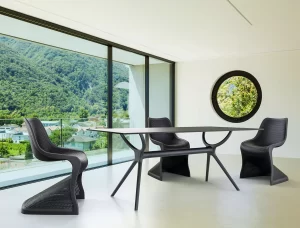

Best Cafe Chairs for Small Spaces
A tight floorplan shows every furniture decision immediately. One bulky chair can choke a walkway, make a two-top feel cramped, and reduce the number of covers you can run comfortably. Choosing the best cafe chairs for small spaces is not just a style decision – it affects service flow, customer comfort, cleaning access and daily trading capacity.
For cafe operators, fit-out professionals and venue managers, the goal is usually the same: maximise seating without making the room feel crowded. That means looking past a chair’s silhouette on a product page and judging how it will perform in a real hospitality setting. Seat width, back profile, stackability, material finish and leg design all matter more in compact venues than they do in larger dining rooms.
What makes the best cafe chairs for small spaces?
In a small cafe, a good chair earns its footprint. It should sit neatly under the table, allow enough elbow room between guests, and leave clear paths for staff carrying plates, coffees and trays. Slim dimensions are part of the equation, but proportion is more important than simply choosing the narrowest model available.
A chair that is too small can feel mean or unstable, especially if customers are likely to linger. On the other hand, a generously padded tub chair may look inviting yet cost you valuable floor space on every table. The best balance is usually a commercial chair with a modest seat width, a compact back and a frame that reads visually light.
Open-frame designs often work well because they reduce visual bulk. Chairs with slender powder-coated metal legs, bentwood forms or neat polypropylene shells can help a room feel less cluttered. That matters in small venues where the eye takes in the whole space at once.
Start with dimensions, not appearance
Before narrowing your shortlist, measure the room properly. Many procurement issues start when buyers select by look first and scale second. In compact hospitality spaces, even a difference of a few centimetres per chair can affect how many tables fit and whether service routes remain workable.
Look closely at seat width, overall width, height to the top of the back, and how far the legs spread. Some chairs appear compact from the front but have rear legs that angle out further than expected. Others tuck in efficiently and let you maintain tighter table spacing without compromising comfort.
It is also worth checking the seat height against your table specification. Most cafe tables suit standard dining height seating, but not every chair sits the same way in use. A chair with thick upholstery may bring the diner higher than the listed height suggests. In a small venue, mismatch stands out quickly because tables are often close together and every inconsistency becomes more noticeable.
The best chair styles for compact cafes
Armless dining chairs are usually the safest choice for small hospitality venues. They slide under tables more neatly, allow flexible seating arrangements and avoid the extra width that arms add. This is especially useful where you need to push tables together or separate them depending on service.
Stackable chairs are another strong option. Even if your seating layout stays largely fixed, stackability gives staff more flexibility for cleaning, event resets and off-peak floor adjustments. In small spaces, furniture that can be moved and stored efficiently has real operational value.
Slimline metal chairs suit many modern cafes because they combine durability with a lean profile. Timber-look options bring warmth, while polypropylene or moulded plastic chairs are easy to wipe down and can suit high-turnover environments. Bentwood-style chairs remain popular because they offer a hospitality look without too much visual heaviness, though the exact model still needs to be checked for footprint and commercial suitability.
Fully upholstered chairs can work, but usually in moderation. If your concept leans more premium or you are furnishing a boutique espresso bar with shorter seating runs, a compact upholstered chair may lift the overall look. The trade-off is maintenance, cleaning time and slightly more physical bulk.
Material choice matters more than most buyers expect
In small cafes, furniture gets bumped, shifted and cleaned constantly. Materials need to hold up not just to customer use, but to the pace of the venue. That is why commercial-grade construction matters.
Metal frames are reliable for busy indoor settings and often allow for slimmer profiles. Powder-coated finishes can support a clean, contemporary look and are practical for everyday wear. Polypropylene chairs are useful where easy maintenance is a priority, particularly in quick-service or casual environments. They are light, often stackable and available in colours that can sharpen the branding of a compact room.
Timber and timber-look finishes bring warmth, which can stop a small cafe from feeling too hard or utilitarian. The key is choosing a design with restrained proportions. Some timber chairs are beautifully made but visually heavy. In a narrow footprint, too many heavy-looking chairs can make the room feel smaller than it is.
For semi-outdoor or pavement-adjacent seating, weather-tolerant materials are a practical choice, but buyers should still think about how those chairs perform indoors if the layout changes. Multi-use flexibility is valuable when square metreage is limited.
Comfort versus capacity – where to draw the line
Every venue owner wants more seats, but squeezing in extra covers at the expense of comfort rarely pays off for long. If customers feel boxed in, they notice. So do staff trying to navigate a crowded floor.
The best cafe chairs for small spaces support a realistic middle ground. You want enough comfort for the average dwell time of your customers. For a high-turnover coffee spot, a slimmer, firmer chair can be completely appropriate. For an all-day brunch venue or neighbourhood cafe where guests stay longer, slightly more back support and a better-contoured seat may be worth the reduced density.
This is where concept and trading style should guide selection. A compact chair is not automatically the right chair. It depends on your menu, average ticket, customer behaviour and how long people typically stay at the table.
Layout should shape the chair decision
Chairs do not operate in isolation. They need to work with your tables, banquette seating, aisle widths and entry points. In a small venue, the chair that looks best in a standalone image may be the wrong fit once paired with the actual table base.
Pedestal tables often pair well with compact chairs because they reduce leg clashes and make it easier for diners to sit comfortably in tighter arrangements. If you are using four-leg tables, check the interaction between chair legs and table legs before committing to quantity. Small layout conflicts repeated across the room become major daily frustrations.
Visual consistency also helps. In tight spaces, mixed seating can look curated when done carefully, but it can just as easily read as cluttered. A consistent chair style across most of the floor usually makes the venue feel calmer and more organised. If you want variation, consider limiting it to banquette zones or feature tables.
Procurement realities for small venue fit-outs
Buying for a compact cafe does not mean the decision is minor. In fact, it often requires more precision because there is less room for error. Fast dispatch, clear stock availability and dependable after-sales support become especially important when opening dates are tight or refurbishments are staged around trading hours.
That is also why many buyers prefer working with suppliers who understand commercial use rather than residential styling alone. A chair may photograph well, but if it is not built for hospitality traffic, replacement costs and service disruption can quickly outweigh any upfront saving.
For Australian operators, practical considerations such as local stock holding, metro delivery timing and warranty support can make the procurement process far smoother. Furniture Pro Australia speaks directly to that need, offering commercial furniture options suited to venues that need both presentation and dependable fulfilment.
How to narrow your shortlist quickly
If you are comparing several chair options, filter them through three questions. First, does the footprint support your intended layout? Second, is the chair suitable for your service style and expected wear? Third, does it fit the look of the venue without making the room feel heavier or busier?
When a chair meets all three, you are usually close to the right decision. If it only performs in one or two areas, keep looking. Small cafes rarely have the luxury of forgiving furniture choices.
The strongest outcomes usually come from balancing efficiency with atmosphere. A compact, durable chair that looks sharp, stacks neatly and feels comfortable for the length of the average visit will support both the guest experience and the business model. In small spaces, that kind of balance is what turns a good fit-out into one that works properly every day.
A small cafe does not need oversized furniture to make an impression. It needs chairs that respect the room, support the service, and help every square metre work harder.