



Outdoor Furniture Design Trends for Venues
A busy courtyard at 8 am and a packed beer garden by 6 pm place very different demands on the same fit-out. That is exactly why outdoor furniture design trends matter to venue owners, café operators and commercial buyers right now. The latest direction is not about chasing looks alone. It is about choosing pieces that hold up in Australian conditions, support day-to-day operations and still give customers a reason to stay longer.
What outdoor furniture design trends are really responding to
Commercial outdoor spaces are being asked to do more than ever. A footpath dining area might need to feel casual at breakfast, polished at lunch and event-ready at night. Hotel pool zones need furniture that reads premium but survives heavy turnover. Office terraces are no longer decorative extras. They are used as breakout spaces, informal meeting zones and staff amenities.
That shift is pushing outdoor furniture away from one-dimensional settings and towards flexible, layered environments. Buyers are looking for furniture that can move, stack, clean easily and maintain a consistent visual standard across different trading periods. Style still matters, but procurement decisions are increasingly shaped by durability, lead times, warranty confidence and how quickly a space can be turned around.
Softer profiles are replacing hard-edged settings
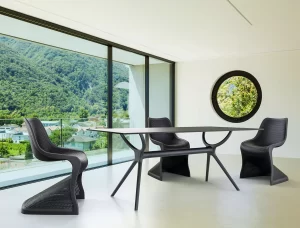
One of the clearest outdoor furniture design trends is the move towards softer silhouettes. Rounded table tops, curved chair backs and more relaxed lounge forms are appearing across hospitality and commercial projects. These shapes help outdoor areas feel more considered and welcoming, especially when operators want to soften concrete, glass and masonry-heavy environments.
There is also a practical reason for the shift. Softer profiles can improve traffic flow in tighter layouts and reduce the visual clutter that comes with too many sharp lines. In a café courtyard or rooftop bar, that can make the whole space feel less rigid without compromising seating capacity.
The trade-off is that highly sculptural pieces are not always the best choice for every venue. If your layout changes frequently or storage is tight, a simpler stackable frame may still be the smarter commercial option. The best results usually come from using curved feature pieces in customer-facing zones and relying on more efficient forms where turnover and storage are bigger concerns.
Mixed materials are becoming the standard
Uniform outdoor settings are giving way to more layered combinations. Aluminium frames paired with timber-look finishes, woven textures with powdercoated metal, and ceramic-look table tops with lightweight bases are all becoming more common. This mix creates depth without asking operators to take on the maintenance burden of fully natural materials in exposed environments.
For commercial buyers, the appeal is clear. Mixed-material furniture can deliver a warmer and more design-led result while still meeting operational needs. A venue can create contrast between dining, lounge and waiting areas without making the space feel disconnected.
This is where specification matters. Not every material mix will suit coastal conditions, high-UV exposure or heavy cleaning cycles. Natural timber can look exceptional, but it may require more upkeep than some operators expect. Synthetic weaves and commercial-grade finishes often offer a better balance when ease of maintenance sits high on the brief.
Neutral bases with strategic colour
Outdoor palettes are settling into a more practical rhythm. Charcoal, white, sand, gum leaf, olive and muted terracotta are proving more durable from a styling perspective than louder trend colours. They work across hospitality and workplace settings, and they are easier to build around as branding, signage and accessories evolve.
That does not mean outdoor areas are turning bland. Instead, colour is being used more deliberately. A venue might keep tables and core seating neutral, then introduce colour through occasional chairs, bar stools or lounge accents. This approach reduces the risk of a full fit-out dating quickly while still giving the space personality.
For buyers furnishing multiple sites, this is especially useful. A restrained base palette makes it easier to maintain brand consistency across locations, even when each venue has a slightly different footprint or customer mix.
Low-maintenance finishes are now a design feature
A few years ago, low maintenance was often treated as a background requirement. Now it is central to design selection. Commercial outdoor furniture is being chosen not just for how it looks on day one, but for how it presents after months of weather, spills, stacking and daily cleaning.
That is why powdercoated aluminium continues to perform strongly, particularly for hospitality use. It is lightweight enough for regular movement, resilient enough for busy settings and available in finishes that suit contemporary schemes. Resin and polypropylene pieces also remain relevant, especially where operators need value, easy cleaning and dependable performance.
Higher-end spaces are leaning into upholstered outdoor lounges and premium dining settings, but even here the trend is controlled practicality. Quick-dry foams, removable covers and commercial outdoor fabrics are doing the heavy lifting. The visual message is relaxed luxury. The procurement logic is straightforward – less downtime, simpler maintenance and a better long-term appearance.
Modular layouts are shaping outdoor planning
Outdoor zones are no longer being furnished as static rooms. They are being planned as flexible assets. Modular lounges, movable dining settings and lightweight side tables allow operators to adapt layouts for service changes, private functions or seasonal demand.
This matters because many commercial outdoor spaces are under pressure to do double duty. A hotel terrace may need quiet daytime use and evening group seating. A club balcony may host casual members one day and an event booking the next. Furniture that can be rearranged quickly adds real operational value.
The caution here is stability. Lightweight pieces are useful, but they still need to feel substantial enough for public-facing environments. The strongest product selections balance mobility with commercial-grade construction so spaces can change without looking temporary.
Indoor-outdoor cohesion is getting stronger
Another major shift is the move towards visual continuity between interior and exterior areas. Rather than treating the outdoor zone as an afterthought, businesses are selecting furniture that extends the interior design language beyond the doorway. The effect is especially strong in cafés, restaurants, hotels and modern workplaces where the outdoor area forms part of the overall guest or staff experience.
That might mean repeating similar tones, materials or shapes across both settings. It does not require matching suites. In fact, overly matched spaces can feel flat. What works better is a related palette and a shared level of finish, so customers feel the outdoor area belongs to the same brand environment.
For commercial fit-outs, this approach can also support better purchasing decisions. When indoor and outdoor ranges are selected with cohesion in mind, the final result feels more intentional and easier to stage, photograph and market.
Comfort is becoming more visible
Outdoor furniture used to lean heavily on utility. That has changed. Customers now expect outdoor areas to offer the same level of comfort they associate with indoor hospitality spaces. As a result, seating proportions are improving, back support is getting more attention and lounge-style configurations are appearing in places that previously relied only on standard dining sets.
This trend is not just aesthetic. Longer dwell time can translate into stronger spend, better customer satisfaction and more usable square metres across a venue. For office settings, comfortable outdoor furniture supports staff wellbeing and helps terraces become genuinely functional rather than rarely used showpieces.
Of course, comfort has to be balanced with cleaning and wear. Deep cushions and soft finishes look inviting, but they are not ideal everywhere. High-turnover cafés, exposed streetfronts and heavily weathered sites often need firmer, simpler seating solutions. The best commercial outcomes come from matching the comfort level to the actual use case rather than following residential styling too closely.
What buyers should prioritise before following a trend
Trend awareness is useful, but specification still wins projects. Before selecting a style direction, buyers should consider how exposed the space is, how often furniture will be moved, whether stacking is required, and what turnaround expectations apply. A striking chair that cannot handle daily service pressure will cost more in replacements and disruption than it adds in visual appeal.
Stock availability matters too. For businesses working to opening dates, refurbishments or seasonal demand, ready-to-dispatch commercial furniture can be just as important as design intent. That is where an experienced supplier such as Furniture Pro Australia can make the process more reliable – not simply by offering range, but by helping buyers match product types to operational realities.
The strongest outdoor spaces being delivered now are not built around a single trend. They combine clean aesthetics, practical materials and flexible planning in a way that suits the site, the customer and the pace of trade. If your outdoor area needs to work harder this year, start with furniture that earns its place every day, not just in the first photo.