



Stackable Chairs vs Folding Chairs
When you are fitting out a venue, office breakout area or multi-use function space, the choice between stackable chairs vs folding chairs affects more than storage. It changes how quickly your team can reset a room, how polished the space looks during service, and how well your seating holds up under commercial use. On paper, both save space. In practice, they suit very different operating styles.
For business buyers, this is rarely a style-only decision. Seating needs to work during busy periods, store efficiently after hours, and still present well in front-of-house settings. The right option depends on how often chairs are moved, who is handling them, how much storage space you actually have, and whether appearance matters as much as flexibility.
Stackable chairs vs folding chairs: the real difference
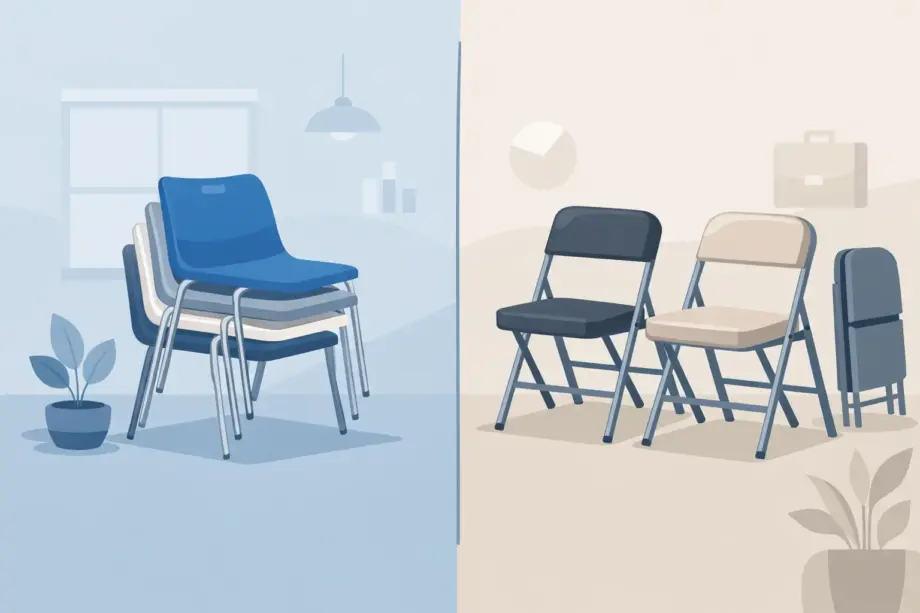
The simplest distinction is in the frame design. Stackable chairs are built to sit vertically on top of each other, usually with fixed legs and a solid frame. Folding chairs collapse inward on a hinge so they can be stored flatter. That basic difference shapes everything from comfort to setup speed.
Stackable chairs usually feel more like permanent seating. They tend to have a stronger visual presence, better ergonomics and a more refined commercial look. In cafés, restaurants, conference rooms and waiting areas, that matters. Folding chairs are built for quick deployment and compact storage. They are a practical choice for halls, community venues, training rooms and occasional event use where flexibility is the priority.
Neither is automatically better. The better chair is the one that matches the pace and pressure of your space.
When stackable chairs make more sense
If your chairs are used every day and visible to customers, stackable seating often delivers the stronger long-term result. In hospitality settings, the visual standard matters just as much as the floorplan. A stackable chair can still be easy to move and store, but it generally looks intentional in the room rather than temporary.
This becomes important in restaurants, cafés, clubs and reception spaces where furniture is part of the customer experience. A well-designed stackable chair can support your interior scheme, handle regular cleaning and maintain a more substantial feel for guests. Many commercial models are also made from materials that suit high-traffic use, such as powder-coated steel, polypropylene, timber-look finishes or upholstered shells.
Operationally, stackable chairs are also efficient when resets happen often but not constantly. If your staff are moving a small run of chairs before service, after functions or between room layouts, stacking is straightforward. There are no moving parts to check, and no folding mechanism to wear out over time.
For offices, stackable visitor chairs and meeting chairs are a strong option where spare seating is needed without committing to bulky permanent layouts. They store neatly, come out quickly for larger meetings, and present a more professional look than basic folding alternatives.
Strength, comfort and presentation
One of the biggest advantages of stackable chairs is that they usually feel better to sit in for longer periods. Because the frame is fixed, the seat and back can offer more support. That matters in conference spaces, training rooms, waiting areas and dining environments where people may sit for an hour or more.
They also tend to feel sturdier in use. Commercial buyers notice this quickly. A chair that shifts, flexes or feels light under load can affect customer perception, even if it is technically fit for purpose. In front-facing environments, a more solid chair supports a better overall impression.
When folding chairs are the better tool
Folding chairs earn their place in spaces where speed, storage density and occasional use matter most. If your room serves different functions from one day to the next, folding seating can make life easier. They are often ideal for event venues, training facilities, school halls, places of worship, temporary setups and overflow seating requirements.
Their biggest advantage is storage efficiency. Because they fold flat, you can store a large quantity in a relatively small footprint. If back-of-house space is tight, this can be the deciding factor. A stack of fixed chairs still takes up vertical and floor space. Folded chairs can be trolleyed, lined up and packed away with less volume.
They are also practical for teams that need to deploy seating fast for larger numbers. If you are setting up rows for a presentation, seminar or community event, folding chairs are built for that rhythm. They open quickly, align easily and can be cleared just as fast.
That said, folding chairs can feel more utilitarian. In many settings, that is completely fine. In others, especially hospitality or premium office environments, they may look too temporary unless selected carefully.
Storage is not just about size
Buyers often compare dimensions and stop there, but storage efficiency is also about access and handling. A very compact folded chair still needs to be carried, unpacked and reopened. If staff are doing that daily, the labour side matters.
Stackable chairs may take up more room than folded chairs, but they can be faster to lift on and off a trolley in smaller batches. Folding chairs may save space, yet add time at setup. This is where the real-world use case matters more than a product spec sheet.
Key factors to weigh before you buy
For most commercial spaces, the decision comes down to five practical factors: frequency of use, visual standard, storage space, comfort and maintenance.
If the chair will be in constant use, stackable models usually offer better durability and comfort. If it comes out for occasional functions, folding chairs are often the smarter buy. If your venue needs furniture to support brand presentation, stackable seating tends to give you more design flexibility. If your store room is tight and every square metre counts, folding chairs may win on footprint alone.
Maintenance is another area worth considering. Folding chairs have hinges and moving parts, which can create wear over time if used heavily. Stackable chairs have simpler construction, but they can show scuffing where frames contact during stacking if they are not designed for commercial handling. Material choice matters here. Polypropylene, metal and commercial-grade finishes generally perform better in high-turnover environments.
Weight matters too. Staff should be able to move chairs safely and quickly, especially in venues where resets happen under time pressure. A heavier chair may feel more premium, but that is not always an advantage for daily bump-in and bump-out work.
Which option suits different commercial spaces?
Hospitality venues usually lean towards stackable chairs because they need seating that looks good on the floor and still stores efficiently when layouts change. Dining spaces, beer gardens, function rooms and cafés benefit from chairs that feel permanent without becoming inflexible.
Offices are more mixed. Visitor seating, training rooms and breakout zones often suit stackable models, especially where a polished finish matters. Folding chairs are more common in overflow meeting areas, temporary seminar setups or multipurpose staff spaces.
Community halls, schools and event venues often get more value from folding chairs, particularly when large numbers need to be stored between uses. In these settings, compact storage and rapid setup can outweigh aesthetics.
Outdoor use adds another layer. If chairs are being moved in and out regularly for weather or event changes, stackable outdoor chairs in weather-friendly materials can be highly practical. Folding outdoor chairs can also work well, but the hardware and hinges need to be suited to the conditions.
The cost question
Price per chair is only part of the story. A cheaper folding chair may look attractive at order stage, but if it wears quickly in daily use or falls short on presentation, the value drops fast. A higher-quality stackable chair may cost more upfront yet perform better over time in busy commercial spaces.
The smarter way to assess cost is to look at the full operating picture. How long will the chair stay on the floor each day? How often will it be moved? Will customers see it? Does it need to support your fit-out standard? If seating is a visible part of your business environment, buying purely on entry price can become expensive later.
For many Australian businesses, the better purchase is the one that balances stock availability, commercial-grade construction, warranty support and suitability for the job. That is usually where experienced suppliers add the most value, because the right recommendation is about application, not just category.
So, stackable chairs or folding chairs?
If you need seating that looks sharper, feels sturdier and works well in daily commercial use, stackable chairs are often the stronger choice. If your priority is flat storage, fast deployment and occasional-use flexibility, folding chairs are hard to beat.
Most buyers are not choosing between good and bad. They are choosing between two different operating models. One supports presentation and everyday durability. The other prioritises storage efficiency and event readiness. Once you are clear on how the space actually runs, the decision usually becomes much simpler.
The best chair is the one that makes your staff faster, your space more functional and your setup easier to manage next month, not just on delivery day.