



Choosing Beer Garden Tables for Busy Venues
A sunny courtyard can become a venue’s highest-earning area, but only when the furniture supports fast service, comfortable seating and the realities of Australian weather. The right beer garden tables do more than fill an outdoor space. They set the pace for turnover, influence how long guests stay and help your venue look considered from the street, through every service period.
For cafés, pubs, clubs and restaurants, the best choice is rarely just the table that looks good in a product image. It is the one that suits the menu, the floorplan, the cleaning routine and the people using it every day.
Start with how guests use the space
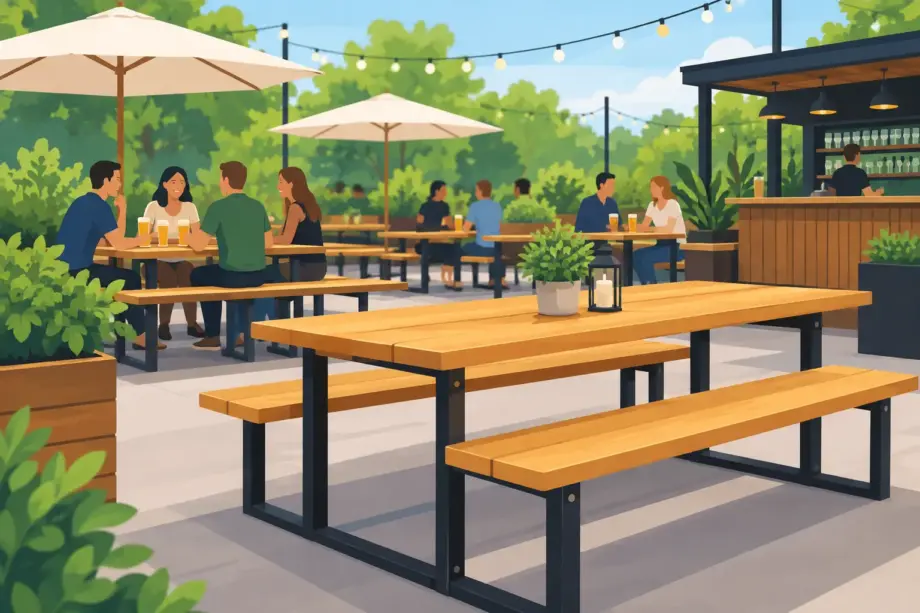
Before comparing materials or finishes, consider the role of the outdoor area. A relaxed pub garden with groups sharing pizzas and jugs needs generous table space and sturdy bases. A café frontage may need smaller tables that allow customers and prams to move easily along the footpath. A club terrace may need a mix of two-person settings and larger communal tables for functions and weekend trade.
Table size directly affects both comfort and capacity. Small round or square tops around 600 mm to 700 mm work well for coffee, casual drinks and light meals. They are efficient for compact courtyards and can be rearranged quickly when group sizes change. Tables around 800 mm provide more room for plated meals, share plates and drinks, making them a reliable option for food-led hospitality venues.
Larger rectangular settings and communal tables create a more social atmosphere, but they require a disciplined layout. Allow enough clearance for chairs to move back, staff to carry trays and guests to pass without squeezing between settings. The most attractive beer garden can still feel poorly run if table placement creates bottlenecks at the bar, kitchen door or amenities.
Choose commercial materials, not just outdoor-looking ones
Outdoor furniture is exposed to far more than sun and rain. It faces sunscreen, salt air, spills, dragging chairs, frequent wipe-downs and the occasional enthusiastic patron. Commercial-grade construction matters because replacement costs and service disruption quickly outweigh a lower initial purchase price.
Aluminium for low-maintenance flexibility
Powder-coated aluminium is a practical choice for many hospitality settings. It is lightweight enough for staff to reposition, naturally resistant to corrosion and available in finishes that work with coastal, contemporary or classic pub environments. Aluminium table frames and bases are particularly useful where furniture needs to be stacked, moved for functions or brought inside after service.
The quality of the powder coating matters. A durable finish helps preserve colour and protects the frame from chips, while a well-designed table should remain stable on pavers, decking or concrete. Adjustable feet are especially useful on slightly uneven outdoor surfaces.
Steel for weight and strength
Steel bases offer a substantial feel and can provide excellent stability for larger tops. They suit venues that want a more industrial look or require tables to stay firmly in position during busy trade. For exposed outdoor areas, select steel designed and finished for exterior use. Standard indoor steel may look suitable initially but is not the right long-term solution when moisture is part of daily operation.
A heavier base is not always better. It improves stability, yet it can slow down layout changes and make cleaning harder for staff. The right balance depends on whether the outdoor area is a fixed dining zone or a flexible space used for events, live music and private bookings.
Timber-look and compact laminate tops
Timber brings warmth to a beer garden, but natural timber demands a maintenance plan. Without regular care, sun, moisture and spills can affect its appearance over time. For venues that want the character of timber with easier day-to-day upkeep, timber-look finishes and commercial compact laminate tops can be a sensible alternative.
Compact laminate is well suited to high-use outdoor dining because it is durable, easy to clean and available in a broad range of colours and textures. It can help carry an indoor design scheme outside without asking staff to spend extra time on maintenance. As with any tabletop, check that the top thickness, edging and fixing method are appropriate for commercial use.
Match the base to the tabletop and service style
A table should feel secure when a guest leans on it, places down a tray or shifts their seat. Stability starts with the relationship between tabletop size, base weight and base footprint. A large top on a narrow pedestal base can create wobble, while oversized bases can interfere with legroom and chair placement.
Pedestal bases are efficient for dining because they leave room around the table edge and make it easier to fit chairs. Four-leg tables can suit casual settings and communal formats, particularly where a more traditional beer garden appearance is wanted. For high tables, make sure the foot rail and base design offer enough stability for guests standing or using stools.
Consider cleaning from the start. Bases with too many crevices collect dirt, leaves and spilled drinks. Simple, durable forms are easier for staff to wipe down between sittings and keep presentable during a long day of trade.
Plan for shade, rain and the Australian climate
No table material is completely maintenance-free in a harsh outdoor environment. Direct UV exposure, heavy rain, heat and coastal conditions all influence the best choice. A covered courtyard may allow greater freedom with materials, while a fully exposed beer garden needs furniture selected for sustained weather exposure.
Umbrellas are often essential for daytime comfort, but they need planning around table positions and base weights. An umbrella opening through the centre of the table can create a clean, integrated setting, although it may reduce usable tabletop space. Freestanding umbrellas offer more flexibility for larger areas but require clear circulation and secure placement.
Drainage also deserves attention. Water should not pool beneath tables or create slippery paths for staff and guests. If the outdoor area is on decking, check how table feet will sit between boards. On pavers, adjustable glides can make a meaningful difference to stability.
Build a layout that earns its keep
A good furniture plan balances covers with guest comfort. Filling every available metre with tables may increase the seat count on paper, but it can reduce service speed and make the area feel crowded. Leave clear routes from the bar and kitchen, preserve access to emergency exits, and allow staff room to clear tables without constantly asking guests to move.
Create a mix of settings where the site allows it. Two-person tables support everyday café and casual dining trade, while a number of larger tables allow families and groups to sit together without pushing furniture into awkward arrangements. High bar tables can activate edges near a railing or garden boundary, but they are generally less suitable as the only seating option for meal-focused venues.
Furniture colour and shape can also guide the feel of the space. Black and charcoal bases are versatile and forgiving in high-traffic areas. Lighter neutral finishes can make smaller courtyards feel open, while timber tones and deep greens often sit naturally in garden-led venues. The goal is visual cohesion, not matching every item exactly.
Think beyond the purchase order
For commercial buyers, the most useful table is one that can be procured, delivered and put into service without unnecessary delays. Confirm stock availability, lead times, warranty coverage and whether assembly is required before committing to a full outdoor fit-out. If your venue needs to open quickly or replace damaged furniture before a peak period, locally held stock and prompt dispatch can be as valuable as the product specification.
It is also worth ordering with future changes in mind. Choosing a table range with compatible bases, tops and seating can make later expansion easier, whether you are adding a second courtyard zone or replacing a small number of pieces after years of use. Furniture Pro Australia supports this practical approach with commercial outdoor furniture selected for venues that need dependable performance alongside a polished presentation.
The strongest beer garden layouts do not chase a single look. They give guests a reason to settle in, give staff room to work efficiently and give the venue an outdoor area that remains inviting well after the first busy summer season.