



Banquet Chairs vs Stackable Seating for Venues
A crowded storeroom after a 250-guest function tells you more about seating than a product photo ever can. The choice between banquet chairs vs stackable seating affects how quickly your team can reset a room, how polished the venue looks in service, and how much floor space remains when the event is over.
For function centres, clubs, hotels, restaurants and community venues, this is not simply a styling decision. Chairs are operational equipment. They need to suit the events you host, the people moving them, the storage available and the standard guests expect from the moment they enter the room.
Banquet chairs vs stackable seating: the real difference
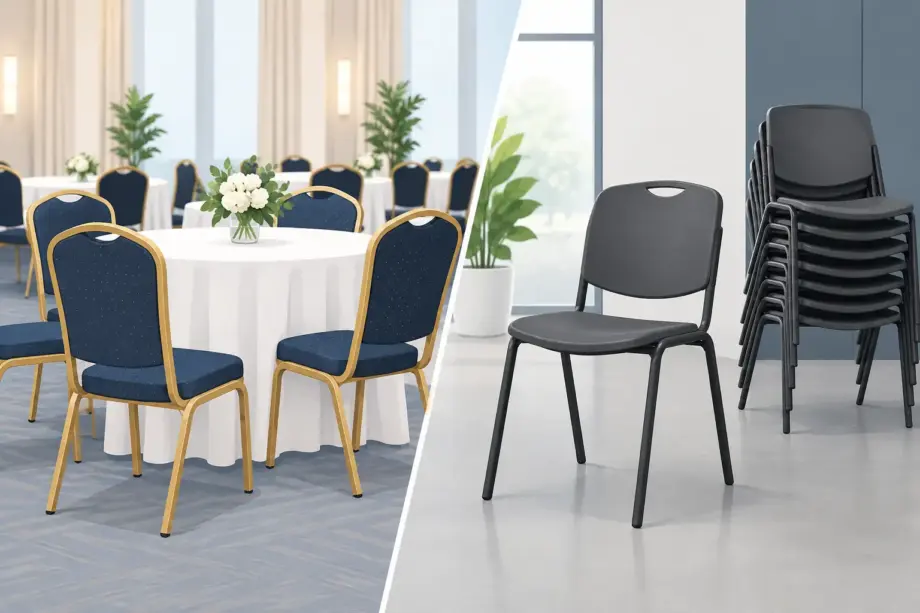
The terms are often treated as opposites, but there is useful overlap. A banquet chair is generally designed for formal events and extended sitting. It commonly has a padded seat and back, a steel or aluminium frame, and proportions that create a more traditional function-room presentation. Many modern banquet chairs are stackable too, so buyers do not always need to choose one benefit over the other.
Stackable seating is the broader category. It includes practical chairs made for compact storage and frequent movement, from upholstered function chairs to polypropylene café seating and commercial indoor-outdoor models. Some are built for high-volume conferences; others suit casual dining areas that need flexibility between breakfast, lunch and private events.
The smarter question is not whether one category is better. It is whether the chair supports your venue’s busiest service period without compromising the experience you want to deliver.
When banquet chairs are the stronger investment
Banquet chairs suit rooms where guests are seated for long stretches: weddings, gala dinners, conferences, award nights, training days and formal club functions. Upholstery and supportive back profiles make a noticeable difference across a two- or three-hour event, particularly where tables are closely set and guests have little reason to move around.
They also create visual consistency at scale. Rows of matching upholstered chairs give a ballroom, function room or conference space a deliberate, finished look. Fabric colour, frame finish and silhouette can support a venue’s existing interiors, whether that means classic black frames, warm neutral upholstery or a more contemporary European-inspired profile.
For operators charging for premium events, this presentation matters. A client inspecting a room before booking will notice the seating immediately. Well-maintained banquet chairs help the space photograph better, feel more considered and justify a higher standard of hire package.
Comfort has a commercial value
Comfort is not just a guest amenity. It can influence how attendees perceive the whole event. At conferences, uncomfortable chairs encourage people to leave sessions early or spend more time standing at the back. At weddings and dinners, they can make a long programme feel longer.
Look beyond the word “padded” when comparing banquet seating. Consider the seat depth, back angle, upholstery quality and frame stability. A chair should feel secure when a guest leans back or shifts position, while remaining light enough for staff to handle safely. Commercial-grade frames and quality welds are particularly valuable in venues where seating is moved several times a week.
The trade-off: storage and handling
Traditional banquet chairs can take up more space per stack than lighter utility seating, and upholstered finishes require greater care. They may not be the right fit for a small venue with one compact storeroom and a team that needs to turn the room around in minutes.
If banquet-style comfort is essential, look for stackable banquet chairs with a practical stack height and compatible trolley. The trolley is often as important as the chair itself. It protects the frames during transport, makes large resets faster and reduces unnecessary lifting for staff.
When stackable seating makes more sense
Stackable seating is the practical choice for spaces that change purpose frequently. Think of a club lounge that becomes a presentation room, a restaurant private dining area, a school hall, a meeting facility or a multi-use community venue. The ability to bring out 80 chairs, clear them away and reclaim the floor can directly improve the value of the space.
For casual hospitality settings, stackable chairs also offer more material and design options. Polypropylene chairs can be easy to clean, lightweight and suitable for covered outdoor areas, depending on the product. Timber-look, metal and upholstered commercial chairs each offer a different balance of atmosphere, maintenance and weight.
This category is particularly useful when staffing is lean. A lightweight chair that stacks neatly and moves on a trolley helps a small team manage changeovers efficiently. It can also reduce the temptation to leave spare chairs cluttering dining areas or function-room edges.
Storage efficiency is more than stack height
A chair that stacks high is useful, but storage planning needs a closer look. Check the chair footprint, the number of chairs in a safe stack, trolley dimensions and access through your storeroom doors. Measure lifts, service corridors and loading areas too. A chair may be compact on paper but awkward to move through a narrow back-of-house route.
Protective stacking buffers or caps are worth considering, especially for painted frames and upholstered chairs. Repeated chair-on-chair contact can lead to chips, marks and fabric wear that quickly detract from the room’s presentation. Storage conditions matter as well. Keep upholstered seating dry and away from direct sunlight or damp walls where possible.
Match the chair to your event mix
A venue that hosts 30-person business breakfasts on weekdays and 180-person wedding receptions on Saturdays has different needs from a café that occasionally rearranges its dining room for a local group. Start with how your space earns revenue, not just how it looks when empty.
If formal functions account for most bookings, banquet chairs are likely to provide the stronger guest experience and visual return. If the venue relies on fast room resets, variable layouts or limited storage, stackable seating may deliver more operational value. For many businesses, the best solution is a mix: banquet chairs for the main function room and lighter stacking chairs for breakouts, training rooms or overflow capacity.
Consider the following practical factors before placing an order:
- Guest dwell time: Longer events favour supportive, upholstered seating.
- Reset frequency: Daily or multiple daily changes favour lighter chairs and efficient stacking.
- Storage capacity: Measure the actual storage route, not only the storeroom floor.
- Cleaning demands: Hospitality venues benefit from finishes that suit their cleaning routines and likely spills.
- Brand presentation: Formal venues may require upholstery and a more refined silhouette, while casual spaces can use colour and simpler materials to create personality.
- Outdoor use: Do not assume a stackable chair is weather-ready. Select furniture specifically rated for the intended indoor or outdoor environment.
Durability, maintenance and whole-of-life cost
The lowest purchase price is rarely the lowest operating cost. Chairs in commercial venues face dragged feet, bag straps, drink spills, repeated stacking and constant transport. A cheaper chair that wobbles, scratches easily or loses its finish can create replacement costs and presentation problems much sooner than expected.
Assess the frame material, joins, glides and upholstery as a complete system. Steel frames are common in banquet furniture for their strength and stability, while aluminium can reduce weight for high-movement applications. On hard floors, suitable feet or glides help protect both the chair and the surface. In carpeted venues, stable leg design becomes especially important when chairs are moved or arranged in theatre style.
Maintenance should also fit the way your team works. Wipeable surfaces can be useful for high-turnover spaces, while fabric upholstery may need spot-cleaning procedures and a planned deep-clean schedule. Choosing a practical colour or texture can help conceal minor day-to-day marks, but it should still align with your venue’s design scheme.
Create a seating plan before choosing a model
Before purchasing, set up a basic floor plan using the chair dimensions and the table sizes you intend to use. Allow for guest access, service paths, fire egress and space behind occupied chairs. A chair that looks slim in isolation can make a room feel crowded when paired with large tables or generous place settings.
This exercise often changes the decision. You may find that a slightly narrower banquet chair improves capacity without reducing comfort, or that a stackable chair with arms takes up too much room for your preferred layout. It can also reveal whether you need dedicated storage trolleys, chair covers or a second seating type for different event formats.
Furniture Pro Australia supports commercial buyers with seating designed for hospitality and professional spaces, along with Australian-held stock options that can help when an upgrade is tied to an opening date or booked event calendar. When comparing products, confirm stock availability, dispatch timing, delivery access and warranty coverage before committing to quantities.
The right chair should make the room easier to sell, easier to operate and more comfortable to sit in. Choose the option that holds up through your busiest function, not just the one that looks best in a quiet showroom.