


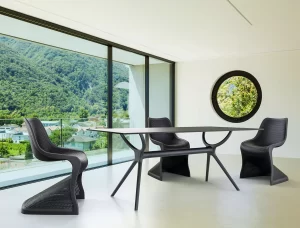

Best Outdoor Tables for Venues in 2026

A wobbly table can undo a good venue fit-out faster than almost anything else. Guests notice it, staff work around it, and before long it becomes one more operational headache. Choosing the best outdoor tables for venues is not just about matching a style brief – it is about buying furniture that holds up in weather, handles daily trade, and still looks right on the floor six months later.
What makes the best outdoor tables for venues?
For commercial spaces, the right table has to do three jobs at once. It needs to suit the look of the venue, perform under constant use, and make day-to-day service easier rather than harder. That balance matters whether you are fitting out a laneway café, a beer garden, a hotel terrace or a council-facing dining zone.
The best outdoor tables for venues tend to share a few traits. They are stable on less-than-perfect surfaces, made from commercial-grade materials, simple to clean, and sized to support your seating plan without wasting floor area. They also need to be practical to procure. If you are opening on a deadline or replacing tired stock mid-season, local availability, dispatch speed and warranty support become part of the buying decision.
A table that looks great in a product image but stains easily, fades quickly or shifts under load is usually a false economy. Commercial buyers know that replacement cycles, maintenance time and customer perception all affect the real cost.
Start with the venue type, not the trend
Outdoor furniture choices make more sense when they start with service style. A quick-service café has different needs from a full-service restaurant, and both differ again from a club courtyard or rooftop bar.
For cafés with high turnover, smaller tops often work best because they keep layouts flexible and support fast resets between sittings. In pubs and clubs, larger rectangular tables can help group seating and longer dwell times, but they need stronger bases and enough spacing for circulation. For hotel terraces or premium dining spaces, finishes and silhouette tend to matter more, though durability still has to come first.
This is where many buyers get caught. They buy to an aesthetic trend – coastal timber look, industrial black, light European styling – without checking whether the format fits the way the space actually trades. Good outdoor tables should support revenue and service flow, not just the design board.
Material choice matters more outdoors
In Australian conditions, outdoor tables take a beating. UV exposure, rain, salt air in coastal areas and regular cleaning all test the finish. Material selection is where a lot of long-term value is won or lost.
Aluminium for low-maintenance performance
Aluminium tables are a strong choice for venues that want a clean, modern look with minimal upkeep. They resist rust, are generally lighter to handle, and suit spaces where furniture needs to be moved for cleaning or layout changes. Powdercoated aluminium performs particularly well when the finish quality is good.
The trade-off is that very lightweight tables can feel less planted in windy areas. In exposed outdoor settings, pair aluminium tops with a heavier base or choose a model designed for commercial stability.
Compact laminate and resin tops for hard use
Compact laminate is popular in hospitality for good reason. It is durable, easy to wipe down, and available in finishes that mimic timber, stone and plain contemporary surfaces. Resin-based tops can also be a practical option in high-turnover spaces where spills, heat and weather are constant factors.
These materials usually suit venues that prioritise easy maintenance and visual consistency. They may not have the warmth of real timber, but they often outperform it in demanding commercial environments.
Timber-look appeal with fewer headaches
Many operators want the natural look of timber outdoors, but real timber needs more attention. It can weather unevenly, require re-oiling, and react differently depending on sun and moisture exposure. For some venues that patina is part of the appeal. For others, it becomes a maintenance task staff never quite get to.
Timber-look commercial surfaces offer a useful middle ground. You keep the warmth and texture guests respond to, while reducing upkeep and extending the presentable life of the furniture.
Table bases are where performance shows up
Buyers often focus on the top and forget the base. In practice, the base is what determines whether the table feels solid during service.
A good commercial outdoor table base should be heavy enough for the top size, engineered for stability, and appropriate for the surface underneath. On paving, decking or uneven footpath dining areas, adjustable feet can make a real difference. So can pedestal bases, which reduce trip points and make seating more comfortable around the perimeter.
For larger tops, underspecifying the base is a common mistake. It may look acceptable at install, then become an issue once the venue is busy and tables are joined, moved or leaned on regularly. If your space is exposed to wind, stability needs even more attention.
Size and shape should follow capacity goals
The ideal table size depends on how many covers you need, how long guests stay, and how much room staff need to move through the space. There is no single best size, but there are smart starting points.
Round tables work well in smaller outdoor footprints because they soften circulation and suit conversational seating. Square tables are efficient and easy to push together when larger groups arrive. Rectangular tables are often best for group dining zones, shared seating and pub-style layouts, but they can eat into walkways if the space is tight.
As a rule, compact two-person and four-person formats give venues more flexibility than oversized tables. They let you reconfigure quickly, adapt to booking patterns and make better use of mixed service periods. If your busiest sessions involve couples and small groups, buying too many large tables can leave capacity stranded.
The best outdoor tables for venues also need to stack up operationally
Looks matter, but operations decide whether the purchase was worthwhile. Ask how the tables will be cleaned, moved, stored and replaced if needed. If your team resets the floor daily, lightweight but stable models may be worth prioritising. If the outdoor area is fixed year-round, heavier pieces may offer better long-term performance.
It is also worth thinking about consistency across the venue. Outdoor tables should connect visually with chairs, stools, lounges and indoor finishes, especially in spaces where guests move between zones. That does not mean everything has to match exactly. It does mean the furniture should feel intentionally specified.
For procurement teams and venue managers, supply confidence matters too. Stock held in Australia, fast dispatch, dependable metro delivery and after-sales support can make the difference between a smooth rollout and a drawn-out fit-out delay. That is one reason commercial buyers often work with suppliers such as Furniture Pro Australia, where product range and fulfilment capability support the practical side of sourcing.
Common mistakes buyers make
The first is buying residential-grade furniture for commercial use. It may look similar at a glance, but it is rarely built for the load, cleaning frequency or exposure that venue settings demand.
The second is choosing by price alone. Budget matters, of course, but the cheapest table is not the lowest-cost option if it needs early replacement or creates service issues. Commercial furniture should be assessed over its useful life, not just its invoice price.
The third is overlooking the local environment. A sheltered courtyard and a beachfront terrace are not the same brief. Sun exposure, wind, moisture and salt all affect what will hold up.
How to make a smarter shortlist
When comparing options, narrow your choices by use case first, then by material, then by finish. That order keeps the decision practical. Start with how the table will be used, who will use it, and what the venue needs from it during service. Only then should colour, texture and trend come into play.
It also helps to think in ranges rather than one-off pieces. If you may need to add matching stock later, choose a table line with enough depth and continuity to support future expansion or replacement. That is especially useful for growing hospitality groups and multi-site operators who want consistency across locations.
The best buying decisions usually come from balancing three things: visual impact, commercial durability and supply reliability. Miss one, and the table may still look fine on day one, but it will not serve the venue as well over time.
Outdoor dining is one of the first things guests judge when they arrive, and one of the last things staff deal with at close. Choose tables that work hard in both moments, and the whole space feels easier to run.