


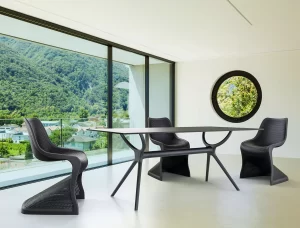

Choosing Commercial Dining Chairs

A chair can look right on the floor and still be wrong for service by the end of the week. That is the challenge with commercial dining chairs. They need to carry the visual standard of your venue, handle constant use, and still make sense from a procurement point of view when you are ordering at scale.
For hospitality operators, fit-out teams and venue managers, chair selection is rarely just about appearance. The wrong seat height can throw off table compatibility. The wrong frame material can age badly under daily cleaning. The wrong silhouette can limit how many covers you fit on the floor. When margins, labour and guest experience are all in play, every chair has a job to do.
What commercial dining chairs need to do
In a residential setting, a dining chair may only need to suit a room and feel comfortable for a long meal. In a commercial setting, the brief is tighter. Commercial dining chairs need to support repeated use, faster turnover, regular cleaning, and a wider range of body types and seating patterns.
That changes the buying criteria straight away. A chair for a busy café in Sydney or a club bistro in regional Australia will often be moved, stacked, wiped down and reset multiple times a day. It might be dragged across hard flooring, exposed to spills, or shifted outdoors for an event. A stylish profile matters, but only if the structure and finish can keep up.
There is also the question of consistency. If you are furnishing 30, 60 or 120 seats, variation becomes obvious. You need a product line that can be supplied reliably, matched across batches and supported with practical lead times. This is where commercial furniture buying differs from buying a few attractive pieces off the shelf.
How to assess commercial dining chairs for your venue
The best starting point is not the chair itself. It is the setting in which it will be used. A quick-service café, a premium dining room and a retirement living dining space may all need dining chairs, but the decision drivers are different.
Start with the service model
If your venue relies on high turnover, lighter chairs can help staff reset tables quickly and reduce strain during service. In longer-stay environments, guest comfort may justify a more supportive seat, a wider frame or an upholstered finish. Neither option is better in every case. It depends on how long guests stay seated and how often the floor plan changes.
Armless designs usually give you more flexibility and allow tighter table spacing. Armchairs can create a more generous feel and lift the perceived value of the space, but they take up more room and can limit how neatly chairs tuck in. In smaller footprints, that trade-off matters.
Check dimensions before style
A chair can photograph beautifully and still miss the mark if the proportions are off. Seat height should work with your table height, and the overall width needs to suit your floor plan. Even a difference of a few centimetres becomes significant when multiplied across a full dining area.
Back height also affects the room visually. Lower-profile chairs can make a space feel more open, while higher backs introduce more presence and support. If you are fitting out a compact venue, slimmer frames often help maintain flow without making the room feel crowded.
Think about movement and storage
Some venues need chairs that can be stacked, nested or moved quickly between zones. Others need a permanent, more substantial seating solution that stays in place. If your team regularly resets function rooms or clears areas for cleaning, handling efficiency is not a minor detail. It affects labour every day.
Stackable commercial dining chairs can be a practical win, but not every stacked design delivers the same level of comfort or premium appearance. If stacking is essential, make sure it does not force you into a look that conflicts with the rest of the fit-out.
Materials matter more than most buyers expect
Material choice shapes durability, maintenance and the overall feel of the venue. It also affects how the chairs age, which is often more important than how they look on day one.
Timber and timber-look finishes
Timber brings warmth and works well across cafés, restaurants and clubs. It suits both classic and contemporary interiors and can soften harder architectural finishes such as concrete, stone or steel. The key question is whether the construction is truly commercial grade and whether the finish can tolerate frequent cleaning.
Timber-look alternatives can offer visual consistency with easier maintenance, particularly in high-traffic settings. They may not deliver the same natural character as real timber, but they can reduce upkeep and provide a more predictable finish across large orders.
Metal frames
Metal-framed dining chairs are often chosen for strength, stability and a sharper contemporary profile. Powdercoated finishes can work well in busy venues, particularly where chairs are moved often or used in mixed indoor-outdoor applications.
That said, the feel is different. Metal can read more industrial or minimal, which may suit the concept perfectly or make the room feel harder than intended. The finish quality matters here. A poor coating or weak weld will show wear quickly under commercial use.
Polypropylene and easy-clean shells
For venues focused on speed of cleaning and low-maintenance operation, moulded shells and polypropylene options can make a lot of sense. They are often lightweight, practical and available in a broad range of colours and profiles.
The trade-off is that some lower-end options can feel less refined or less comfortable over longer sittings. In casual dining, that may be acceptable. In more design-led spaces, you may want to balance shell chairs with upholstered seats or textured finishes to avoid a flat, overly utilitarian look.
Upholstered seating
Upholstery adds comfort, acoustic softness and a more elevated appearance. It is often the right move for restaurants aiming to increase dwell time or create a more premium dining experience. But upholstery brings maintenance considerations with it.
Fabric, vinyl and commercial-grade coverings each have their place. Vinyl can be easier to wipe down, while fabric may offer a softer, warmer finish. The right answer depends on the venue, the expected spill risk and how important that tactile finish is to your brand presentation.
Matching chairs to the look of the room
Good chair selection is rarely about picking the most eye-catching design in isolation. It is about how the chairs work with tables, flooring, lighting and traffic flow. In commercial interiors, cohesion often reads as quality.
If your tables are already visually heavy, a lighter chair can stop the room from feeling dense. If the space is spare and architectural, a chair with more curve or texture can bring some welcome warmth. Repetition also plays a role. One strong chair design used consistently across the room often looks more confident than several styles competing for attention.
This is where buyers sometimes overcorrect. A very distinctive chair can be appealing in a showroom or on a product page, but if it dominates the room, the fit-out may date faster. A well-resolved, commercially minded design usually has more staying power.
Procurement realities that should influence the decision
Design is only half the job. For most commercial buyers, the purchasing process matters nearly as much as the product itself.
Stock availability should be part of the decision from the start, especially if you are working to an opening date or staged rollout. The ideal chair is not always the one with the most striking profile. Sometimes it is the one that meets the brief, is available in the quantity you need, and can be dispatched quickly enough to keep the project moving.
Warranty support matters too. In commercial environments, wear happens faster and small faults become operational issues quickly when repeated across dozens of units. Buyers should look for suppliers that understand the demands of hospitality and can support the order after delivery, not just process the sale.
This is also why many venues work with range-based suppliers such as Furniture Pro Australia. Access to commercial-grade stock, broad category coverage and practical delivery support makes it easier to build a coordinated dining setting without compromising timelines.
When paying more is worth it
There is no single price point that suits every venue. A suburban café, a university dining area and an upmarket restaurant will all measure value differently. But cheap chairs tend to become expensive when they need replacing early, create maintenance issues or fail to support the room visually.
Paying more is usually justified when the chair improves longevity, reduces upkeep or lifts the perceived quality of the venue. It can also be worth stretching the budget for a design that aligns better with your concept and helps the room feel intentional rather than assembled.
At the same time, not every space needs the most premium option. In high-volume, practical settings, a simpler easy-clean chair with strong commercial performance may be the smarter buy. The real goal is not to spend more. It is to spend with fewer regrets.
The right commercial dining chairs do more than fill a floor plan. They support service, shape the guest experience and help your venue hold its standard over time. Choose with the daily workload in mind, and the room will work harder for you from the first service onward.