



Hospitality Furniture Trends 2026 for Venues

A busy Saturday service exposes every weak furniture decision. Chairs are dragged across floors, tables are reset repeatedly, outdoor settings face heat and sudden rain, and a single uncomfortable seat can shorten a guest’s stay. Hospitality furniture trends 2026 are therefore less about chasing a look for its own sake and more about selecting commercial furniture that supports atmosphere, turnover, comfort and long-term value.
For Australian cafés, restaurants, pubs, clubs and accommodation venues, the strongest direction is clear: spaces are becoming more character-led, while furniture needs to work harder behind the scenes. The best fit-outs will balance visual warmth with cleanability, flexibility with stability, and design detail with reliable stock and practical replacement options.
Hospitality furniture trends 2026: what is changing
Softer, more residential spaces with commercial discipline
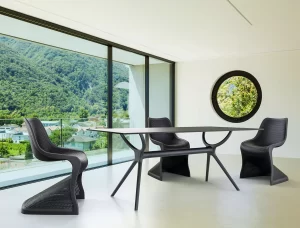
Hospitality interiors are moving further away from the uniform dining room. Guests increasingly expect spaces that feel considered and comfortable, whether they are meeting for a quick coffee, working between appointments or settling in for a long lunch. This is driving demand for upholstered dining chairs, lounge-style seating, curved profiles, textured fabrics and timber-look finishes that bring a more relaxed feel to commercial venues.
The operational requirement has not disappeared. Upholstery still needs to suit high traffic, table bases need to remain stable on the floor, and surfaces need to stand up to daily wiping and regular cleaning. Rather than furnishing an entire venue with one chair and one table, operators are using a controlled mix: dining chairs around standard-height tables, stools at counters, occasional lounge seating near windows or waiting areas, and booth-style zones where longer dwell time makes commercial sense.
This layered approach can make a venue feel more established from day one. It also allows managers to match seating to purpose. A compact café may prioritise lightweight chairs that staff can move quickly, while a wine bar may gain more value from supportive, upholstered seating that encourages guests to stay for another round.
Flexible layouts are now a commercial requirement
The most useful furniture in 2026 is not necessarily the most complicated. It is furniture that helps a venue change shape without disrupting service. Tables that can be joined for group bookings, stackable or easily movable chairs, and bar stools that work across counter and high-table zones give operators more control over the room.
Flexibility matters because hospitality spaces now often serve several functions across one day. A breakfast venue may become a casual meeting place by mid-morning, host a private function in the afternoon and operate as a lively dinner setting at night. Fixed furniture can still be the right choice for banquettes, booths and carefully planned dining runs, but movable pieces help recover capacity when trade patterns change.
There is a trade-off. Lightweight furniture can simplify resets, yet it must still feel solid and safe in use. Before ordering, consider how often the layout will change, who will move the furniture, where spare pieces will be stored and whether tables need levelling feet for uneven surfaces. A flexible room only works if the furniture is manageable for staff.
Outdoor areas are becoming true venue zones
Australian outdoor dining is no longer treated as overflow seating. Courtyards, kerbside dining areas, rooftops, resort terraces and club balconies are being furnished as deliberate extensions of the venue. This means outdoor furniture needs to contribute to the overall visual identity, not simply fill spare space.
Expect to see more coordinated outdoor collections combining chairs, stools, armchairs, dining tables, coffee tables and sunloungers. Neutral bases such as charcoal, black, white, taupe and natural-look finishes remain highly workable, while earthy greens, terracotta tones and warmer timber effects add personality without dating quickly.
Material selection remains the critical decision. Polypropylene seating, aluminium frames and outdoor-rated tabletops are practical choices for exposed or high-turnover spaces because they are generally easy to clean and suited to regular use. For covered terraces, rope detailing, outdoor upholstery and timber accents can create a more elevated setting, provided the venue has a realistic plan for weather protection and maintenance.
A visually appealing outdoor chair is not automatically suitable for a harsh Australian summer or coastal environment. Check the intended application, cleaning requirements, frame construction and warranty conditions before committing to a full setting. It is usually more cost-effective to choose fit-for-purpose materials upfront than to replace faded or corroded furniture after a short period.
Material contrast brings depth without clutter
The polished, all-matching hospitality fit-out is giving way to more material contrast. Powder-coated metal paired with timber-look tops, upholstered chairs beside stone-look tables, and woven outdoor textures against concrete or tiled floors can create a distinctive space without excessive decoration.
The key is restraint. A venue does not need five feature finishes to feel designed. Start with one dominant material, one supporting finish and a clear accent. For example, black metal table bases can anchor a room, oak-look tabletops can add warmth, and olive or rust seating can provide a controlled point of colour. This approach is easier to maintain when replacement furniture is required later.
Texture is also doing more of the visual work. Bouclé-inspired upholstery, ribbed details, timber grain and woven surfaces add interest in photographs and in person. In dining environments, however, texture must be assessed through an operational lens. Deep grooves, pale fabrics and delicate finishes may need more cleaning time than a fast-paced venue can reasonably allow.
Comfort is being measured in minutes, not just appearances
The return of experience-led hospitality has made seating comfort more valuable. Guests may forgive a compact table in a busy café, but they are less likely to return if chairs feel unstable, too low for the tabletop or uncomfortable after twenty minutes. Ergonomic proportions, supportive backrests and sensible seat heights are becoming central to furniture selection.
This does not mean every venue needs heavily upholstered seating. For quick-service areas, durable moulded chairs and stools can be exactly right. The important point is to match the chair to the expected length of stay. A high-turnover food court operator may value wipe-clean surfaces and easy stacking. A restaurant focused on shared dining may need more generous seats, armchairs or banquette sections that support longer bookings.
Always assess tables and seating together. Dining chair height, tabletop thickness, pedestal placement and leg clearance affect the guest experience as much as the individual product design. Where possible, test a representative setting before placing a larger commercial order.
Sustainability is shifting from a claim to a buying standard
Sustainability continues to influence hospitality procurement, but buyers are asking more practical questions. Can the furniture remain in service for years? Can surfaces be cleaned and maintained rather than replaced? Are components, finishes and materials suited to the actual environment? Is the design timeless enough to survive a minor rebrand?
Longevity is often the most meaningful sustainability measure in a commercial setting. A chair that holds up to daily use, has a straightforward care routine and remains visually relevant can be a better investment than a lower-priced option that needs replacing prematurely. Selecting versatile tables and chairs also allows furniture to move between areas of the business as needs change.
For venue managers, this means looking beyond an initial unit price. Consider warranty coverage, availability of matching pieces, delivery timing and the ability to reorder a proven design. These details reduce the risk of a fit-out becoming difficult to maintain six months after opening.
How to turn trends into a workable furniture schedule
Start with the operating model rather than a mood board. Map the number of covers required, average booking duration, service paths, accessible circulation, storage needs and weather exposure. Then assign furniture types to each zone: entry and waiting, dining, bar, lounge, private function and outdoor areas.
Next, identify the pieces that must perform hardest. In most venues, these are dining chairs, tables, stools and outdoor seating. Invest attention in dimensions, commercial-grade materials and ease of cleaning here, then use feature furniture more selectively to create visual moments. A statement lounge chair can lift a reception area, but it should not distract from the practical furniture that carries daily service.
Finally, buy with installation and continuity in mind. Confirm stock availability before locking in opening dates, allow for delivery access and assembly, and keep a record of finishes and product specifications for future additions. Suppliers such as Furniture Pro Australia can be particularly useful when a project requires coordinated indoor, outdoor and commercial furniture from available local stock.
The strongest hospitality spaces in 2026 will not look fashionable because every piece is new or dramatic. They will feel purposeful: comfortable enough for guests to stay, durable enough for staff to rely on, and flexible enough to keep earning their place as the venue evolves.