



Mesh Chairs vs Leather Chairs: Which Suits?
A chair that looks right on the floor can still be the wrong call after a full week of use. In the real world of fit-outs, procurement and daily operations, the mesh chairs vs leather chairs decision usually comes down to more than style. It affects comfort across long shifts, cleaning routines, heat retention, perceived quality and how well the chair suits the job at hand.
For business buyers, there is no universal winner. A boardroom, reception area, manager’s office and open-plan workstation all ask different things of seating. The best choice is the one that matches how the space operates, how often the chair is used and what impression you want the room to leave.
Mesh chairs vs leather chairs for everyday use
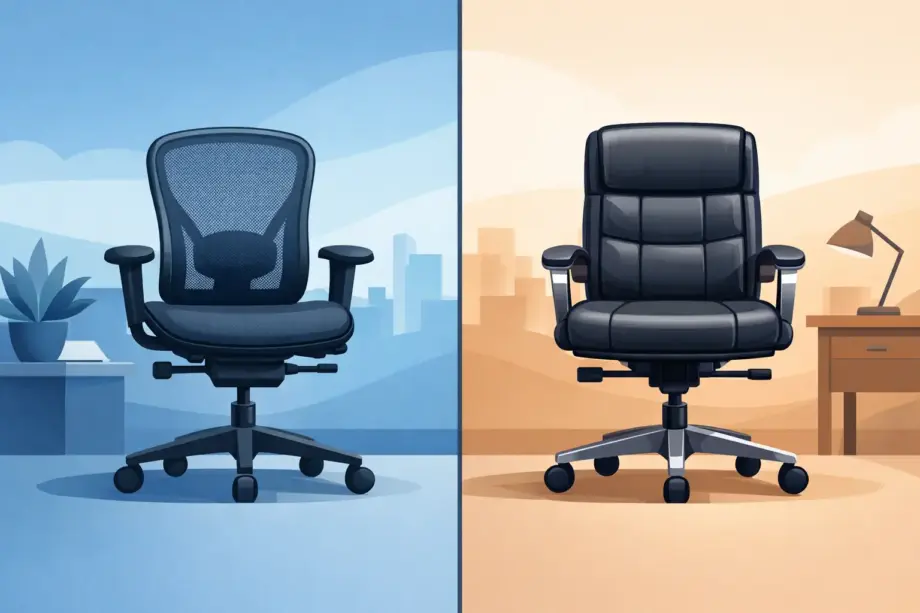
Mesh chairs are usually chosen for ergonomic task seating. They suit workstations, home offices and multi-user office environments where airflow and adjustable support matter. A quality mesh chair can feel lighter in the room, both visually and physically, which helps in compact layouts or contemporary fit-outs.
Leather chairs, including bonded, faux and genuine leather options, tend to be selected for executive offices, meeting rooms and client-facing spaces. They present as more substantial and often more formal. That makes them popular where appearance is closely tied to brand perception.
The key difference is practical as much as visual. Mesh generally prioritises breathability and active support. Leather generally prioritises finish, presence and a more padded sitting experience. Neither is automatically better. The use case matters.
Comfort: breathability versus cushioning
If staff are seated for long periods, comfort should be assessed over hours, not five minutes in a showroom or on first delivery. Mesh performs well in warmer conditions because it allows air to circulate through the backrest. In Australian offices, that can be a genuine advantage, especially in spaces with inconsistent air conditioning or strong afternoon sun.
A good mesh chair can also contour to the back without feeling bulky. For task work, that often translates into better day-to-day comfort, particularly for users who prefer a cooler seat and more responsive support.
Leather chairs feel different. They usually offer a softer, more cushioned sit, which many buyers associate with premium comfort. In executive or meeting settings, that can work well. The drawback is temperature. Leather can feel warm in summer and cool in winter, and over long periods some users find it less forgiving than a breathable mesh back.
Seat construction matters here too. Many mesh office chairs still use a fabric or foam seat pan, while some leather chairs are generously padded throughout. If comfort is the top priority, it is worth looking beyond the material label and considering lumbar support, seat depth, arm adjustability and recline function.
What works best for long desk hours?
For most workstation settings, mesh has the edge. It is typically better suited to sustained computer work, particularly when paired with ergonomic adjustments. Leather can still work in private offices, but for high-use desk seating across a broader team, mesh is often the safer operational choice.
Appearance and fit-out impact
This is where leather tends to stand out. It gives a room a more polished, executive look and can lift the visual weight of a space. In boardrooms, private offices and reception zones, leather chairs often help communicate authority, professionalism and permanence.
Mesh is more understated. It suits contemporary commercial interiors, agile offices and practical fit-outs where clean lines matter. It can also stop a workspace from feeling visually heavy, which is useful when you are furnishing larger teams or trying to maintain openness in a compact floorplate.
There is also a branding question. If your space is client-facing and you want a traditional premium finish, leather often makes sense. If your brand leans modern, efficient and design-conscious, mesh may align better. For many projects, the right answer is a mix – mesh for task seating, leather for executive and visitor zones.
Cleaning, upkeep and day-to-day maintenance
Procurement decisions do not end at delivery. Chairs need to be easy to maintain across the life of the fit-out.
Leather is often seen as easy to wipe down, and in many settings that is true. Dust and minor spills can usually be managed quickly, which suits meeting rooms and offices with moderate use. But leather also needs the right care to maintain its finish. Over time, lower-grade materials may crack, peel or show wear, particularly in high-contact areas.
Mesh does not crack or peel in the same way, but it can collect dust in the weave and may require more detailed cleaning. In busy environments, especially where chairs are used daily by multiple people, that is worth considering. Even so, quality commercial mesh generally handles regular office use well.
For hospitality-adjacent office spaces or hybrid environments where chairs may be moved, used hard or cleaned frequently, the frame and base are just as important as the upholstery. A strong commercial-grade structure will usually outlast any finish that is chosen for looks alone.
Durability in commercial settings
Durability depends less on whether a chair is mesh or leather and more on whether it is built for commercial use. That said, each material ages differently.
Mesh can hold up very well when tensioned properly and paired with a quality frame. It resists the flattened look that some padded chairs develop over time. In high-use office settings, that can be an advantage. The risk is that cheaper mesh can sag or lose support, which affects both comfort and appearance.
Leather chairs can age attractively if the material quality is high and the chair is used in the right setting. In lower-quality options, wear can become obvious faster, especially on seat edges, arm pads and high-friction points. For spaces with constant in-and-out traffic, that can shorten the chair’s presentable life.
This is where commercial buyers need to be clear-eyed. A chair in a director’s office and a chair on a shared operations floor are not under the same pressure. Match the specification to the workload, not just the mood board.
Cost and value over time
Mesh task chairs are often the more cost-effective option for outfitting larger teams, particularly when ergonomic performance is part of the brief. They offer a practical balance of comfort, airflow and modern presentation without pushing every seat into executive pricing.
Leather chairs can command a higher price, especially where premium upholstery and heavier construction are involved. That cost may be justified in customer-facing or senior office spaces where finish matters. The value question is whether the visual upgrade supports the role of the room.
For procurement teams, consistency also matters. If you are fitting out multiple zones, it can be more efficient to standardise mesh seating across task areas and reserve leather for selected spaces where the look carries more weight. That creates visual hierarchy without overspending where the return is limited.
Which chair suits which space?
In open-plan offices, call centres, shared desks and home office setups, mesh is usually the practical performer. It supports all-day use, suits warmer conditions and aligns with the ergonomic needs of task-focused work.
In executive offices, formal meeting rooms and reception spaces, leather often earns its place. It delivers a more substantial aesthetic and can help create a premium first impression.
There are grey areas. A manager who spends full days at a desk may prefer mesh over leather, even in a private office. A design-led studio may choose mesh throughout to keep the fit-out lighter and more contemporary. A client-facing consultancy may prefer leather in every meeting room for consistency. It depends on how the space is used, who is using it and what standard the environment needs to project.
The smarter buying question
Rather than asking which material is best in general, ask what the chair needs to do. Does it need to support eight-hour desk work? Handle multiple users? Impress clients? Stay cooler through summer? Clean up quickly between uses? Work across a large rollout with predictable budgeting?
Those questions lead to better decisions than material preference alone. At Furniture Pro Australia, that is often the difference between buying a chair that simply fills a room and selecting one that supports the way the business actually runs.
If you are choosing for performance, mesh is often the stronger everyday option. If you are choosing for presence, leather usually has the advantage. The best fit-out rarely picks one material on principle. It chooses each chair with the room, the workload and the end user in mind.