


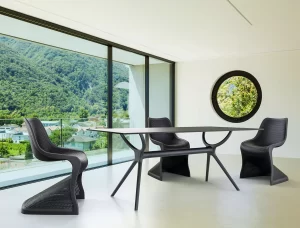

Outdoor Dining Furniture for Busy Venues
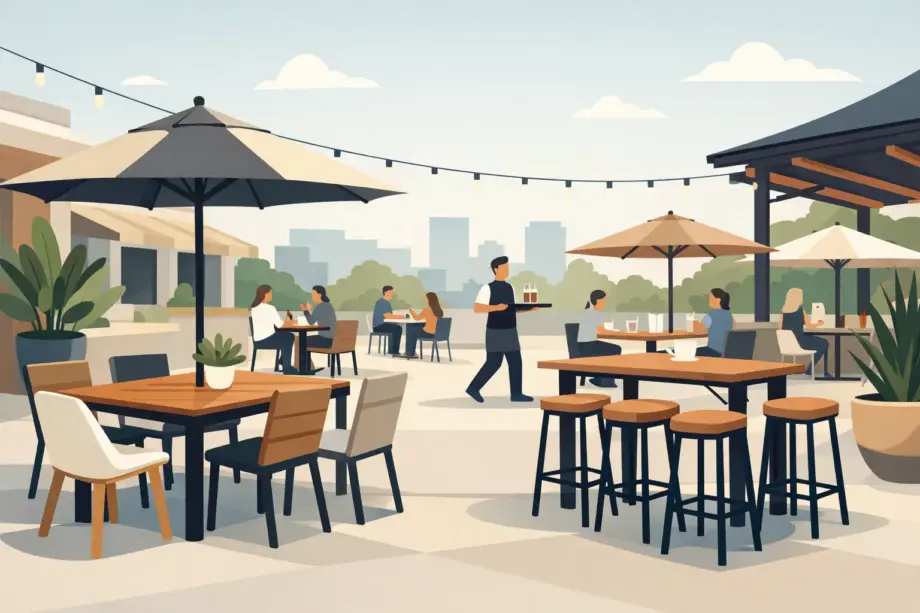
A terrace can be the highest-earning part of a venue, or the area customers avoid after one uncomfortable meal. The difference is rarely just the view. Outdoor dining furniture needs to look considered from the street, feel comfortable through a long lunch and withstand constant movement, cleaning and changing Australian conditions. For cafés, pubs, clubs, restaurants and shared commercial spaces, the right selection supports service as much as it supports the overall look.
The best result comes from planning the outdoor area as an operational space, not simply filling it with tables and chairs. Seat numbers matter, but circulation, weather exposure, storage, cleaning routines and the style of your indoor space all shape the right buying decision.
Start with how the space earns its keep
Before selecting colours or chair profiles, consider what happens in the area across a normal week. A quick-service café may need lightweight chairs that staff can reset between busy sittings. A restaurant with table service may benefit from more substantial seating and larger table tops that accommodate shared plates, drinks and menus. A club courtyard can require flexible layouts for weekday dining, functions and live events.
Capacity is only one measure. Allow enough clearance for staff to carry trays safely, guests to pull out chairs and accessible movement through the space. A tightly packed layout can add seats on paper while slowing service and making the setting feel cramped. In many venues, a slightly lower seat count with a clear pathway and comfortable table spacing produces a better guest experience and a more efficient floor team.
It also pays to think about turnover. Compact square tables are easy to join for groups or separate for couples. Round tables soften narrow areas and can make conversation easier, but their footprint is less efficient in a long straight run. Bar-height settings create energy and work well near rails or views, while standard-height tables generally suit longer meals and broader customer groups. A mix can make sense, provided the layout remains intentional rather than looking like surplus furniture has been moved outside.
Match outdoor dining furniture to the exposure
Australian outdoor areas do not face one set of conditions. A covered laneway in Melbourne, a waterfront deck in Sydney and an exposed hotel patio in coastal Queensland place very different demands on furniture. Assess sun, rain, salt air, wind, nearby trees and whether furniture stays outside overnight before committing to a material.
Powder-coated aluminium is a practical commercial choice for many venues because it is lightweight, corrosion-resistant and straightforward to clean. It suits chairs, stools and table bases where staff need to move settings regularly. Quality matters, particularly around joins, feet and the consistency of the coating. In coastal locations, regular washing is still worthwhile to remove salt residue and preserve the finish.
Polypropylene and other commercial-grade moulded materials are useful where durability, easy maintenance and stackability are priorities. They are well suited to busy cafés, poolside spaces and casual dining zones. The trade-off is that very lightweight pieces can shift in strong wind, so the weight of the chair and the conditions of the site should be considered together.
Timber brings warmth and can create a more established dining atmosphere, especially when it connects with indoor joinery or landscaping. It does, however, need the right level of care. Even weather-resistant timbers benefit from a maintenance plan, and furniture should not be treated as maintenance-free simply because it is designed for outdoor use. If daily operations leave little time for refinishing or covering tables, aluminium, compact laminate or similarly low-maintenance alternatives may be the better commercial choice.
Table tops deserve the same scrutiny as chairs. They need to resist spills, heat, cleaning products and frequent contact with plates, glasses and cutlery. A stable base is equally important. A table that rocks on uneven pavers will frustrate guests and create avoidable work for staff, regardless of how good the top looks. Adjustable feet can be particularly valuable in older courtyards, tiled terraces and uneven alfresco areas.
Choose comfort that works through service
Comfort is not limited to cushions. Seat height, back support, arm placement and the relationship between chair and table all affect how long guests are happy to stay. For a venue focused on coffee and quick meals, a simple, easy-clean chair may be exactly right. For long lunches, dinner service or premium drinks, a more supportive profile can help the outdoor area feel like a true extension of the dining room.
Check dimensions rather than relying on product photos alone. A chair may look slim but have armrests that make it difficult to place closely around smaller tables. Conversely, an armless chair can improve capacity and flexibility but may not deliver the comfort expected in a higher-end setting. Test the combination of chair, table height and table top size wherever possible. The details influence whether a place setting feels generous or awkward.
For venues with a mixed customer base, accessible seating should be part of the original plan. Allow positions where wheelchairs can approach comfortably and avoid filling every edge with fixed seating. These considerations support a more welcoming venue and reduce the need for last-minute rearranging during service.
Think beyond the dining set
Outdoor furniture performs better when the surrounding elements support it. Shade structures, umbrellas, planters, heaters and wind protection can change how often an area is used and how long furniture lasts. Shade is especially valuable for exposed Australian sites, but umbrella placement must not obstruct service paths or create a crowded visual line.
Storage is another practical consideration. Stackable chairs and foldable tables can make cleaning, functions and bad-weather preparation far simpler. This does not mean every item needs to be lightweight or temporary in appearance. It means choosing pieces that suit the actual handling capacity of the team. A beautiful chair that needs two staff members to move is not always the right choice for a compact venue with fast resets.
Build a coordinated commercial look
An outdoor area should feel connected to the business, even when the furniture serves a different purpose from the indoor dining room. This can be achieved through a repeated colour, a shared material finish or a similar design language. A charcoal aluminium frame may tie into interior metalwork. Natural-look table tops can soften a modern façade. A consistent chair silhouette across indoor and outdoor areas can make a small venue feel more resolved.
Avoid choosing every piece from the same range simply for convenience. Repetition can be effective, but contrast often gives a space more depth. For example, dining chairs and bar stools can share a frame colour while using distinct shapes suited to their height and purpose. The key is to create a deliberate hierarchy rather than a catalogue-page effect.
Colour choices should also account for maintenance. Very pale finishes can look crisp but may show marks quickly in high-traffic settings. Dark surfaces can become hot in full sun. Textured finishes and mid-tones are often forgiving for commercial use, while still offering a polished appearance. If branding is a priority, use furniture as the foundation and bring stronger colours through cushions, umbrellas, menus or planters that can be refreshed more easily.
Buy for the full operating cycle
Commercial outdoor furniture is a procurement decision, not a one-day styling exercise. Consider lead times, Australian-held stock, delivery access, assembly requirements, replacement availability and warranty coverage before placing an order. A large table may suit the concept but be difficult to deliver through a narrow side entrance. A setting that arrives flat-packed may save freight costs but require labour at a time when the team is preparing for opening.
Ordering a small number of spare chairs or matching table tops can be sensible for high-use venues. Designs change, and being able to replace a damaged item with a close match protects the consistency of the space. It is also worth keeping product details on file so future orders are simple when expanding a terrace or refreshing one section at a time.
Furniture Pro Australia supports commercial buyers with a broad range of hospitality-ready outdoor options, Australian-held stock and practical delivery support. That combination matters when a refurbishment, new fit-out or seasonal expansion has a real opening date attached to it.
A practical final check before ordering
Review the proposed layout at the busiest point of service, not only when the area is empty. Picture trays moving through the tables, umbrellas open, prams and wheelchairs arriving, chairs pulled back and staff cleaning down after a full sitting. If the space still works in that scenario, the furniture plan is doing its job.
Well-chosen outdoor dining furniture gives a venue more than extra seats. It creates a reliable, inviting trading area that staff can run confidently and customers will choose to return to when the weather is right.