



Restaurant Booths vs Loose Seating: Which Fits?
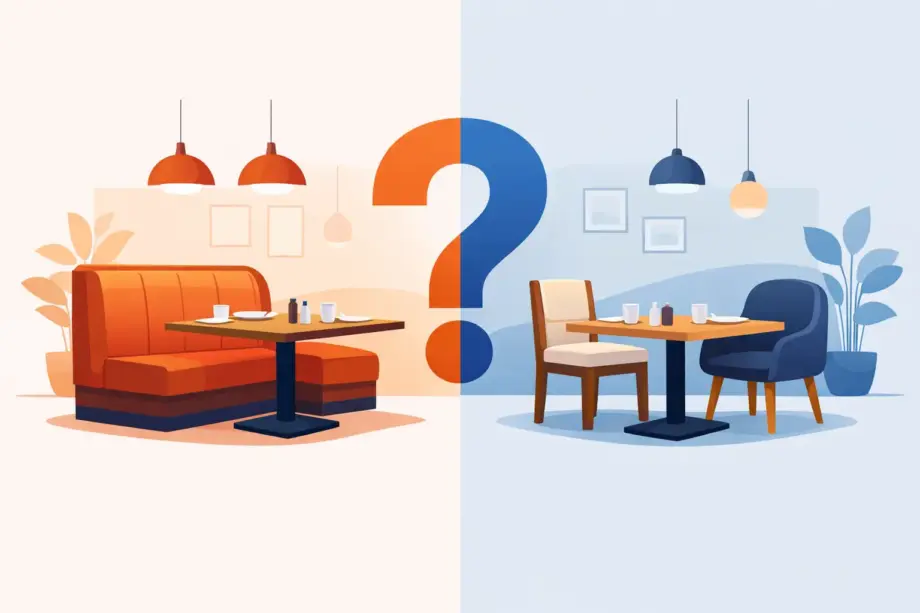
The choice between restaurant booths vs loose seating is not simply an aesthetic decision. It affects how many guests you can serve, how comfortably they stay, how easily your team can reset tables, and whether the room still works when trade gets busy. For cafés, restaurants, pubs and clubs, the strongest layouts usually begin with the operating model, then use furniture to support it.
Booths create definition, privacy and a more settled dining experience. Loose tables and chairs bring flexibility, faster reconfiguration and simpler replacement over time. Neither option is automatically better. The right balance depends on your floor plan, service style, average group size and the atmosphere you want customers to remember.
Restaurant booths vs loose seating: the commercial difference
Fixed booth seating is built into the layout. It turns a section of the room into reliable, repeatable covers, often along walls, windows or perimeter zones that might otherwise be difficult to furnish efficiently. It can make a large space feel warmer and can give diners a degree of separation from surrounding tables.
Loose seating includes freestanding dining chairs, stools, tables and occasional lounges that can be moved, grouped or replaced independently. It is the practical choice for venues that host varied party sizes, change their layout for functions, or need to keep pathways open for staff and accessible circulation.
The commercial difference is flexibility versus permanence. A booth layout makes a clear promise about how the venue will operate. Loose seating keeps more options available as trade patterns, menus and customer expectations change.
When booths earn their footprint
A well-designed booth can be one of the hardest-working areas in a hospitality venue. Customers often choose booth seats first, particularly for longer lunches, family dining, business meetings and evening service. The high backs and upholstered surfaces can also help soften acoustics in rooms with hard flooring, glass and exposed ceilings.
Booths are especially effective where you want a more premium or intimate feel without building separate private dining rooms. Banquette seating along a wall can also use depth efficiently, allowing two-person or four-person tables to sit against it in a clean, ordered row. In a casual restaurant, this can make the space feel considered rather than crowded.
There are operational benefits too. A fixed banquette gives tables a consistent position, making it easier to plan aisle widths, lighting and table service. It can prevent chairs from drifting into walkways during a busy shift, which helps both presentation and safety.
However, booths need careful specification. Upholstery should be commercial-grade, hard-wearing and suited to the cleaning products used by your team. Seat height, table height, back angle and table base placement all matter. A booth that looks generous but traps guests against a table, or makes it difficult for staff to clear plates, will quickly become a frustration.
Best suited to longer stays and predictable groups
Booths work best when customer dwell time is part of the experience rather than a problem to minimise. Think neighbourhood restaurants, bistros, family venues, clubs and all-day dining spaces where comfort supports food and beverage spend.
They are also useful when table sizes are fairly predictable. If most bookings are for two or four guests, a run of booths can offer attractive, dependable seating. If your trade relies heavily on groups that fluctuate from two to ten people, a fully fixed layout may limit the way you can manage the room.
Why loose seating remains a smart investment
Freestanding tables and chairs give venue managers room to respond. Two tables can become one larger setting, a row can be shifted for a function, and a worn chair can be replaced without taking an entire seating section out of service. That matters in fast-moving hospitality environments where every available cover counts.
Loose seating can also make a compact room feel lighter. Chairs with slim frames, timber details or moulded shells maintain visual interest without the visual weight of high booth backs. For cafés with daytime traffic, quick table turns and a mix of solo guests, pairs and laptop users, this openness can be more useful than enclosure.
From a procurement perspective, loose furniture is typically easier to stage and update. You can order commercial dining chairs and table bases in phases, add matching pieces as the venue grows, or refresh a colour direction without committing to joinery changes. Australian-held stock and prompt dispatch are particularly valuable when a damaged item needs replacing or an opening date moves forward.
The trade-off is that loose seating needs discipline. Chairs must be selected for commercial use, not just appearance. They need stable frames, suitable weight ratings, durable finishes and glides that suit the flooring. Table bases should be positioned to prevent wobble, allow comfortable leg room and stand up to daily movement.
Capacity is more than a seat count
It is tempting to compare a booth and a chair by counting how many people fit around each table. That approach can lead to an attractive plan that underperforms during service. Capacity only works when guests can enter and leave their seats comfortably, staff can carry plates safely, and accessible paths remain clear.
Booths can increase the usable value of perimeter space, but they also require a fixed depth. Loose tables may be moved closer together when needed, yet an overly tight arrangement reduces comfort and slows service. The best plan considers the full movement of the room: arrivals, prams, high chairs, trays, cleaning equipment, staff stations and emergency access.
Before committing to furniture, mark the proposed footprint at full scale on site. Sit people at a test table, pull chairs back, walk the service path and consider where bags and coats will go. This simple exercise often reveals whether a visually impressive booth run is too deep, or whether a loose-table zone needs fewer but better-positioned settings.
A mixed layout is often the strongest answer
For many venues, restaurant booths vs loose seating is the wrong either-or question. A mixed plan usually delivers the best operational result. Booths can anchor the perimeter and create desirable destination seats, while loose tables occupy the centre of the room and provide the flexibility required for bookings and events.
For example, a restaurant might use two-person tables against a banquette for couples and weekday dining, four-person loose tables in the central floor for combination bookings, and bar stools near a window or counter for walk-ins. The result is a room that feels layered and intentional while still giving the host team options.
Mixing furniture also helps create visual zoning. Upholstered booths can signal relaxed dining, timber chairs can suit the main restaurant floor, and stools can support a casual bar edge. The finishes should still relate to one another through a shared palette, frame colour or material detail. Cohesion comes from repetition, not from using only one furniture type.
Choose materials for the way your venue trades
The right material depends on cleaning routines, traffic volume, location and brand direction. Upholstered booth seating brings comfort and acoustic benefits, but it needs a finish designed for hospitality use. Vinyl is often practical for frequent wipe-downs, while quality commercial fabrics can suit lower-risk dining zones where warmth and texture are priorities.
Timber chairs bring character and can work across contemporary, coastal and classic interiors, provided the construction and finish are commercial-grade. Metal frames are a reliable option for high-traffic venues and can be paired with timber, upholstered or polypropylene seats. In outdoor-adjacent areas, choose materials that can handle the conditions rather than carrying indoor furniture outside as an afterthought.
Consider maintenance at the same time as appearance. Darker upholstery may conceal marks but can make a room feel heavy. Light finishes brighten a space but may require more frequent care. A well-chosen chair with replaceable glides and a durable table top may offer better long-term value than a cheaper option that needs early replacement.
Questions to settle before placing an order
A furniture schedule becomes easier to approve when the key decisions are clear. Ask whether your venue needs to maximise rapid table turns or encourage longer stays; whether group sizes are consistent or variable; whether the layout must change for functions; and whether your team can comfortably clean and maintain the selected finishes.
Also consider lead times, delivery access and installation. Fixed booths may involve joinery coordination, site measurements and staged installation, while loose furniture can often be delivered and positioned quickly. For an opening, refurbishment or replacement order, selecting commercial furniture that is available from Australian stock can reduce unnecessary pressure on the project timetable.
Furniture Pro Australia supplies commercial seating, tables and hospitality furniture for venues that need design appeal without losing sight of day-to-day performance. Matching the product to the service model is the most effective way to protect your investment.
The most successful dining rooms do not force every customer into the same experience. Give guests the cosy booth they request for a long dinner, the flexible table that suits a larger booking, and the clear space your staff need to deliver great service.