



Shared Workspace Lockers for Better Offices
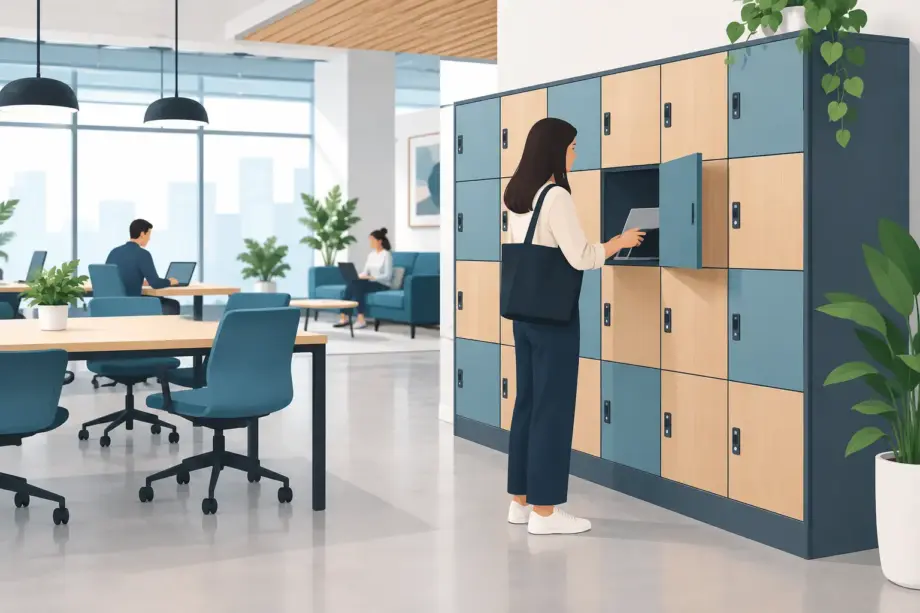
A desk that is used by three people across a week cannot double as everyone’s storage drawer. As hybrid work becomes a standard operating model, shared workspace lockers give employees a secure place for laptops, personal items and work materials without sacrificing the flexibility of a bookable desk layout.
For office managers, facilities teams and fit-out professionals, lockers are no longer an afterthought tucked into a corridor. They are part of the workplace system. Well-planned storage reduces desk clutter, supports clean-desk policies and helps a busy office feel considered from the moment staff or visitors walk through the door.
Why flexible offices need personal storage
Hot-desking works best when employees can arrive, settle in and get to work without carrying their whole workday around the building. A locker gives each person a reliable base for the items that do not belong on a shared workstation: a headset, notebook, charger, lunch, spare shoes or confidential papers.
The operational benefit is just as clear. Without assigned pedestal drawers, teams need another way to store the equipment that supports their role. Shared lockers keep common work areas clear and make it easier for cleaning teams to access desks at the end of the day. They also reduce the familiar scramble for meeting-room power adapters and misplaced peripherals.
There is a cultural benefit, too. A workplace designed entirely around temporary seating can feel impersonal. Providing practical personal storage signals that flexibility does not mean employees are treated as visitors. The right locker configuration gives people a sense of belonging while preserving the efficient footprint of shared workstations.
Choosing shared workspace lockers by use case
The best locker is not always the largest one. Start with what staff genuinely need to store, how long they need access and where the unit will sit. A compact bank near a work zone may suit a team that only needs day-use storage. Deeper compartments are more practical where staff store bags, cycling gear, uniforms or laptop cases.
Day-use lockers for hot-desking
Day-use lockers suit offices where staff select a desk on arrival and clear their belongings before leaving. These are often managed with a digital lock, PIN code or staff access card, allowing each compartment to be reused daily. This model makes efficient use of a smaller locker bank, particularly where office attendance changes from one day to the next.
It does require clear policy. Staff need to know when lockers are to be emptied, how forgotten items are handled and who can assist if a compartment is locked. A good system is simple enough that reception or facilities staff are not spending the morning resolving access issues.
Assigned lockers for regular teams
Assigned lockers are a stronger choice for employees who attend several days each week, need specialised equipment or do not have fixed desks. They also suit workplaces with personal protective equipment, sales samples or reference materials that should stay on site.
Although assigned storage can require more floor space, it can be worth the investment for teams that rely on consistency. The key is to size the allocation to the attendance model rather than simply providing one large locker per headcount. In a hybrid office, occupancy data may show that a smaller number of lockers can comfortably serve a larger workforce.
Team and project storage
Not every compartment needs to be personal. Larger lockable units can hold project materials, event supplies, IT equipment or shared stationery. Placing this storage close to collaboration areas prevents meeting rooms becoming overflow cupboards and keeps supplies where they are used.
For offices with client-facing zones, consider keeping operational storage away from the main arrival path. A tidy, coordinated storage wall can look sharp, but stacks of cartons and ad hoc equipment rarely do.
Plan the location before selecting the finish
A locker bank has to work within the daily movement of the office. Position it close enough to workstations that staff will use it, but not where doors, open compartments or queues interrupt a main walkway. This matters particularly at peak arrival times, when several people may be storing bags at once.
Entry areas are convenient, but they are not always the right answer. If the reception zone is compact or customer-facing, a locker wall can make the space feel crowded. A dedicated transition area between entry and work zones often gives the best result. Staff can put away personal items before reaching shared desks, while visitors still see a clean, professional workplace.
Measure more than the available wall. Allow for locker door swing, circulation clearance and access requirements. Consider sightlines as well: a tall bank can help define zones in an open-plan workplace, while lower storage can preserve natural light and visual connection across the floorplate.
Materials and finishes that stand up to commercial use
Lockers need to cope with constant opening, closing, bags being pushed inside and the occasional rushed Monday morning. Commercial-grade construction should be the priority, particularly in high-traffic offices, clubs, education spaces and hospitality back-of-house areas.
Powder-coated steel remains a practical choice for hard-working environments. It is durable, easy to maintain and available in finishes that can either blend into a neutral fit-out or provide a deliberate burst of colour. Timber-look finishes can bring warmth to offices designed around residential-style furniture, acoustic panels and soft seating, though they need a specification suited to the level of use and cleaning required.
Colour should serve the workplace, not just the moodboard. Neutral lockers are adaptable across future furniture changes. Brighter doors can assist with wayfinding, identify departments or add energy to staff areas. For a polished outcome, coordinate locker finishes with workstation frames, meeting tables, task seating and storage units rather than choosing each piece in isolation.
Locks, security and everyday administration
The locking method shapes the user experience. Traditional key locks are familiar and cost-effective, but keys can be misplaced and create an administrative burden. Combination locks remove the need for keys, although codes may be forgotten. Digital and RFID systems can be highly efficient for larger workplaces, especially when integrated with existing staff access cards.
There is no universal winner. A smaller office with stable staff numbers may find mechanical locks entirely suitable. A multi-tenant workplace, busy club or large corporate office may benefit from electronic access and an audit trail. Consider power requirements, backup access, battery replacement and reset procedures before committing to a system.
Security is also about process. Establish who manages master access, whether lockers are inspected periodically and how unclaimed belongings are handled. If confidential documents are likely to be stored, include that risk in the organisation’s information security policy rather than assuming a basic locker solves it.
Make lockers part of the wider furniture plan
Storage is often purchased late in a fit-out, after desks and seating have already taken the available floor space. That approach can leave an office with furniture that looks complete but does not support the way people work. Planning lockers alongside workstations, office desks, task chairs, meeting furniture and breakout seating creates a more balanced layout.
Think about the full employee journey. A person arrives, secures their belongings, finds a desk, joins a meeting, takes a break and packs up at the end of the day. Every stage should feel straightforward. Lockers contribute to that flow by keeping personal belongings out of circulation areas and shared work zones.
Furniture Pro Australia works with commercial buyers furnishing operational spaces where appearance and durability both matter. When selecting storage alongside the rest of an office package, prioritise dimensions, materials, lead times and delivery access early. This helps avoid the costly last-minute compromise of choosing units that fit the remaining gap rather than the workplace requirement.
A practical specification checklist
Before approving a locker order, confirm the number of users, the likely storage duration and the largest item each person needs to secure. Check compartment dimensions rather than relying on an overall cabinet measurement. A locker that looks generous in a product image may not accommodate a backpack or laptop case comfortably.
Also confirm the installation conditions. Does the floor need levelling? Will units be wall-fixed or joined together for stability? Can the delivery path accommodate the cabinet size, including lifts, doorways and tight turns? These details affect both installation timing and the final result.
Finally, choose a configuration that can adapt. Hybrid work policies, team growth and office layouts change. Modular locker banks, consistent finishes and a supplier with reliable stock availability make it easier to expand a storage solution without creating a mismatched afterthought.
A well-designed office gives people room to collaborate without asking them to live out of a tote bag. Choose shared workspace lockers as a working part of the fit-out, and the whole workplace will look calmer, run cleaner and feel more ready for the way teams work now.