


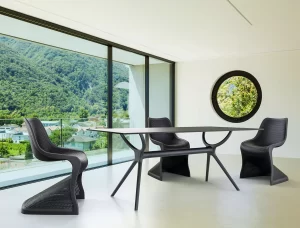

Best Outdoor Seating for Cafes That Last
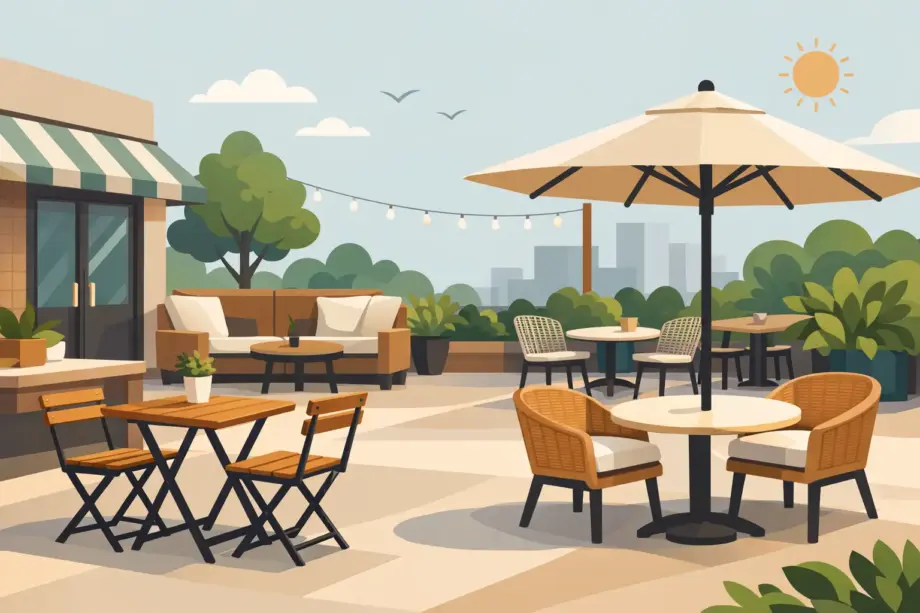
A busy footpath can win you extra covers or create daily headaches. That is why choosing the best outdoor seating for cafes is not just a style decision. It affects turnover, staff workflow, maintenance time and how your venue reads from the street.
Outdoor café furniture has to do more than look good in photos. It needs to handle harsh sun, sudden rain, frequent cleaning and constant movement, while still helping your space feel inviting. For hospitality operators, the right setup is usually the one that balances presentation with commercial durability and straightforward replacement or expansion when the venue gets busier.
What makes the best outdoor seating for cafes?
The best outdoor seating for cafes usually gets four things right – durability, comfort, footprint and visual consistency. Miss one, and the whole area can feel harder to run.
Durability comes first because café furniture is exposed to more than weather. Chairs are dragged, stacked, bumped by prams and delivery trolleys, and cleaned far more often than residential furniture. Commercial-grade construction matters here. A lightweight domestic chair may look the part on day one, but in a busy hospitality setting it can start wobbling, fading or showing wear quickly.
Comfort matters just as much, although it depends on your service model. If you run a fast-paced coffee venue with high turnover, supportive café chairs with a compact seat profile may be enough. If you want customers to settle in for brunch, dessert or a second round of drinks, you will usually need a more relaxed seat angle, a slightly wider chair and tables sized for longer stays.
Footprint is where many venues either gain capacity or lose it. Oversized armchairs can look premium, but they can also reduce your cover count and complicate access. Compact side chairs or stackable designs often make more commercial sense for narrow terraces, laneway sites and busy frontage areas.
Then there is visual consistency. Outdoor seating should feel like part of the venue, not an afterthought pushed onto the footpath. The materials, colours and proportions need to support the café brand, whether that means coastal casual, urban minimal or classic European hospitality styling.
Start with your trading conditions, not trends
It is easy to start with a look. It is smarter to start with the way the space actually operates.
A beachside café in Queensland has very different demands from a Melbourne streetscape venue or a winery in regional NSW. Salt air, intense UV, rain exposure and pavement slope all shape what will perform well. Aluminium chairs might be ideal for one site because they are light, rust-resistant and easy for staff to move. In another venue, resin or polypropylene seating could be the better fit because it is low-maintenance, easy to clean and well suited to frequent use.
Wind is another factor that gets overlooked. If your outdoor area is exposed, very light furniture can become a daily nuisance. On the other hand, if your team needs to reset the floor quickly each morning or stack seating at close, furniture that is too heavy can slow service and increase wear on staff.
This is why there is no single answer to the best outdoor seating for cafes. The right choice depends on climate, service style, customer dwell time and how often the furniture needs to be moved, stored or reconfigured.
Materials that work in commercial outdoor settings
Material selection is where appearance and practicality meet. In most hospitality settings, aluminium remains one of the strongest all-round options. It is durable, relatively lightweight and generally performs well outdoors with minimal fuss. Powder-coated finishes also give venues more control over the final look, whether you are aiming for black, white, muted neutrals or bolder hospitality colours.
Polypropylene and other commercial-grade moulded materials are popular for good reason. They suit high-volume venues, stack easily in many designs and are simple to wipe down between services. For cafés that need fast turnaround and dependable daily performance, they can be a very efficient choice.
Timber has obvious visual appeal and can soften an outdoor setting, but it usually asks for more maintenance. If your venue wants a warmer, more natural look, timber can still work well in covered spaces or lower-exposure areas. You just need to factor in the upkeep and understand that appearance can change over time in outdoor conditions.
Wicker-look and woven styles can suit some concepts, especially where a resort or relaxed European feel is part of the brand. The trade-off is that not every woven product is equal. In a commercial setting, build quality and frame strength matter more than the look alone.
Choosing chairs, stools and lounges by café style
Most cafés will build their outdoor area around dining-height chairs and tables, but not every venue needs the same seating mix.
For compact pavement dining, stackable café chairs are often the smartest option. They give operators flexibility, make cleaning easier and allow for seasonal changes in layout. They also help when councils, neighbouring works or weather conditions mean the outdoor area needs to be cleared quickly.
Bar stools can work well for window counters, rail seating or compact perimeters where a full dining setup would crowd the space. They are especially useful for espresso bars and high-turnover coffee trade. The catch is comfort time. Stools are ideal for shorter visits, but they are rarely the best option if your menu and service style are designed to hold guests for longer.
Outdoor lounges are best used selectively. They can lift the perceived value of a venue and create a strong visual draw, particularly in larger courtyards or licensed spaces. But they generally reduce capacity and are less efficient for food service. For cafés focused on brunch, all-day trade or table service, lounge seating usually works better as a feature zone than as the primary setup.
Layout matters as much as the furniture itself
A well-bought chair can still fail in a poor layout. Outdoor areas need enough room for customers, staff and passing foot traffic to move comfortably. In hospitality, practicality always shows.
Table size should match the likely booking pattern or walk-in behaviour. Too many large tables can leave dead space during quieter periods, while tables that are too small can make food service awkward. Two-person tables that can be joined often give the best flexibility for cafés handling mixed party sizes.
It is also worth thinking about chair movement. Some styles look clean in a catalogue but take up more space once pulled out and occupied. In a narrow frontage, that can make the whole area feel cramped. Slim-profile chairs with a clean stack line often perform better than bulkier designs, even if both look similar at first glance.
Practical features worth prioritising
Commercial buyers usually know that small product details can make a big difference over time. Stackability is one of those details. It reduces storage pressure, speeds up pack-down and makes cleaning around the space easier.
Easy-clean surfaces are another. Outdoor café furniture will deal with coffee spills, sauces, sunscreen, rain residue and regular disinfecting. Textured or heavily detailed surfaces may look interesting, but smoother commercial finishes are generally easier to maintain.
Replaceable glides, stable feet and UV-resistant finishes are also worth attention. These are not glamorous features, but they support the day-to-day running of the venue and can extend the useful life of the furniture.
Stock availability matters too. If you are fitting out a new site or refreshing part of an existing one, you want confidence that matching pieces can be sourced without long delays. For operators managing openings, refurbishments or seasonal demand, Australian-held stock and fast dispatch can be just as important as the design itself.
Getting the look right without losing commercial sense
Good outdoor seating should help your café stand out, but it still needs to earn its place operationally. The best results usually come from choosing a restrained, adaptable base and letting smaller design details carry the personality.
A neutral chair in black, white, olive or charcoal can give you more freedom with planters, umbrellas, table tops and branding elements. That approach also makes it easier to refresh the venue later without replacing the entire outdoor setting.
If your concept depends on a stronger visual statement, use it with intent. A distinctive European-style bistro chair or a sculptural moulded seat can work brilliantly in the right venue. Just make sure the choice holds up in comfort, cleaning and durability, not only appearance.
For many operators, this is where a broad commercial range helps. It gives you room to match style, function and budget without compromising the basics that keep a hospitality space running smoothly.
The best outdoor seating for cafes is the seating that supports service, suits the site and still looks sharp after a long run of busy weekends. If you buy with real trading conditions in mind, the space will not just photograph well – it will work hard every day.