



A Guide to Cafe Furniture Layouts
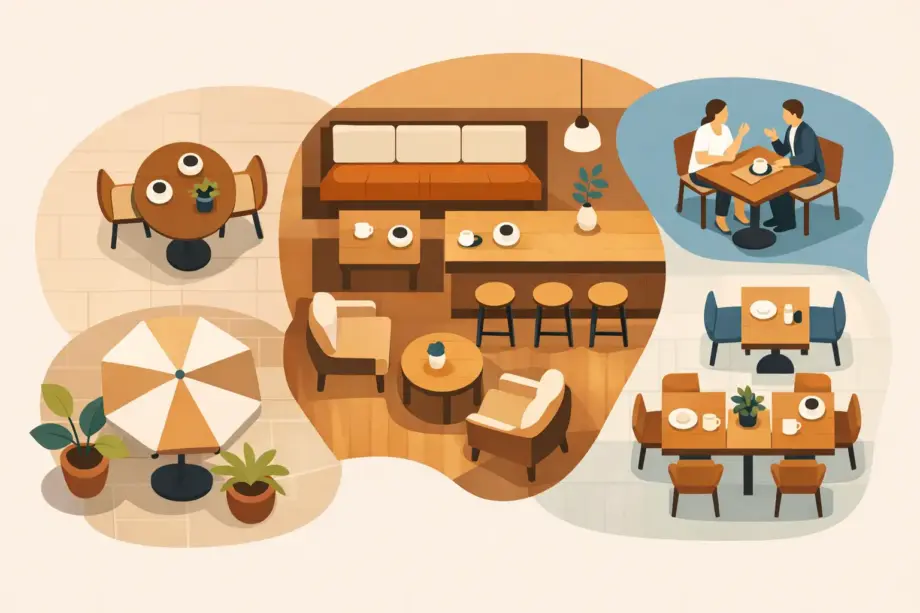
A busy morning service tells you very quickly whether your floor plan works. Staff are squeezing past chairs, customers hesitate at the counter, and the best window seats sit empty because they feel cramped. A good guide to cafe furniture layouts starts there – not with a moodboard, but with how people actually move, wait, sit, eat and leave.
For cafe owners and fit-out decision-makers, layout is where design and operations meet. The right furniture mix can lift capacity, improve traffic flow and make the room feel more inviting without adding a single square metre. The wrong layout can do the opposite, even if the furniture itself looks the part.
What a good cafe layout needs to achieve
A strong layout has to do several jobs at once. It needs to support service speed, create comfortable dining zones, protect access paths and make your venue feel considered rather than crowded. That balance is where many cafes get stuck. Chasing more seats can reduce customer comfort. Leaving too much space between tables may improve movement but hurt revenue per square metre.
That is why layout decisions should start with your trading model. A grab-and-go espresso bar has very different requirements from an all-day brunch venue or a compact suburban cafe handling prams, takeaway traffic and weekend peaks. Before selecting chair styles or tabletop sizes, get clear on how long customers stay, whether table turnover matters more than dwell time, and how much floor space needs to be reserved for queuing, display or waiting.
Guide to cafe furniture layouts by service style
There is no single best arrangement for every venue. The most effective layout is the one that matches how your cafe operates day to day.
Quick-service cafes
If your business leans heavily on takeaway, speed and clarity matter more than lounge-style comfort. Customers should be able to enter, join the queue, order, collect and exit without crossing into seated dining zones. In this format, compact two-person tables, bar seating along a wall or window, and lightweight chairs that are easy to reset tend to work well.
You may still want a few larger tables, but they should not dominate the floor. In fast-service environments, too many four-person settings can leave valuable space underused during weekday trade.
All-day dining cafes
For venues built around longer stays, the layout needs more variety. A mix of two-tops, joinable tables and a small number of communal or banquette-style settings gives you flexibility across different trading periods. Morning solo customers, lunchtime pairs and weekend groups all use the room differently.
This is where a more layered furniture plan pays off. Standard dining chairs in the main floor, stools near windows, and some softer seating in quieter corners can make the space feel more dynamic without complicating service.
Small-footprint neighbourhood cafes
In compact sites, every centimetre matters. Furniture should be scaled to the room, not just selected for visual impact. Slim-profile chairs, round tabletops in tighter circulation areas and wall-side bench seating can help open the floor. Round tables often work better in narrow venues because they soften corners and improve movement around them.
That said, not every small cafe benefits from tiny furniture. If the room feels undersized already, choosing pieces that are too slight can make it feel temporary or uncomfortable. The aim is efficient use of space, not visual compromise.
Planning circulation before choosing furniture
One of the most common layout mistakes is selecting furniture first and trying to fit movement around it later. In practice, circulation should lead the plan. Customers need a clear path from the entry to the counter, and staff need reliable routes between the kitchen pass, floor and clearing station.
Start by marking your fixed elements – counter, service stations, doors, amenities, displays and any outdoor access. Then define the high-traffic paths. These should remain readable even during peak trade, with chairs occupied and bags or prams in the space. If movement only works when every chair is pushed in perfectly, the layout is too tight.
This is also where furniture shape matters. Square and rectangular tables often maximise alignment and capacity, but they can create harder edges in narrow traffic zones. Round tables reduce sharp corners and can improve flow, though they may seat fewer people as efficiently in some layouts. It depends on the proportions of the room and the type of service you run.
Choosing the right furniture mix
A practical guide to cafe furniture layouts is really a guide to combinations. Rarely does one table size or one seating type solve the whole floor.
Two-person tables are the backbone of most cafe layouts because they offer flexibility. They suit solo diners and pairs, and they can often be joined when needed. Four-person tables have their place, especially in family-oriented or suburban venues, but too many can reduce adaptability.
Chair selection affects more than appearance. Stackable or lightweight chairs make floor resets easier and support fast cleaning at close. Upholstered seating can add warmth and comfort, but it may not suit high-turnover settings where durability and wipe-down maintenance take priority. Timber, metal and commercial-grade polypropylene all bring different strengths depending on your interior style and operational demands.
Stools can be valuable in the right zone, especially along windows, counters or narrow ledges. They increase seating without demanding the same floor area as full dining settings. Still, they should complement the venue, not replace accessible standard seating.
Layout zones that make cafes work harder
The strongest cafe floors often feel natural because they have subtle zoning. Customers may not notice it consciously, but the room guides behaviour.
The front section usually carries the highest visual load. It should communicate availability and atmosphere quickly from the street. Window seating, neat two-tops or a defined communal setting can help make the venue look active without appearing cluttered.
The middle of the floor is often the most productive dining area. This is where consistency matters – table spacing, chair alignment and service access all affect how efficiently the section operates. Toward the rear, you may have more freedom to introduce quieter seating or slightly larger group settings.
If you offer outdoor seating, the layout should feel connected to the indoor space rather than treated as an afterthought. Furniture materials need to suit the environment, but the look and scale should still align with the rest of the venue.
Balancing aesthetics with commercial reality
Cafe furniture layouts are often judged first by appearance, but performance is what keeps them working. A beautiful floor plan that slows staff, creates bottlenecks or leaves tables awkward to turn is expensive over time.
That does not mean aesthetics come second. It means they need to be selected with intent. A cohesive palette of tables, chairs and stools helps reinforce your brand and gives the room a professional finish. But the details that matter in commercial use – durability, cleanability, replaceability and stock reliability – should carry equal weight.
This is especially relevant when ordering for a fit-out timeline. Lead times, delivery windows and the ability to source matching pieces later can shape smarter layout choices. For many venues, commercially ready ranges with dependable stock and warranty support make more sense than highly specific pieces that are difficult to replace.
Common layout mistakes to avoid
Most layout issues come down to overfilling the room or planning for ideal conditions instead of real service. A venue may look efficient on paper, but once every chair is occupied, the floor can become difficult to manage.
Another frequent mistake is using too many furniture styles in a small footprint. Variety can add interest, but excessive mixing can make the room feel disjointed and reduce planning consistency. It is usually better to vary table sizes and seating zones within a cohesive range than to introduce too many unrelated furniture types.
Accessibility also needs to be considered early. Not every guest will be comfortable at high seating or in narrow passageways. A commercially sound layout makes room for different needs without making accessible seating feel separate from the rest of the venue.
Getting the layout right before you buy
Before committing to quantities, map the floor properly. Use scaled measurements, not estimates. Test chair pull-out space, service routes and sightlines from the entry. If possible, mock up key settings on site. Even a simple tape-out on the floor can reveal spacing issues that are easy to miss on a screen.
This is where working with an experienced commercial furniture supplier can save time. Furniture Pro Australia, for example, serves venues that need more than a good-looking product image – they need commercial-grade options that suit real layouts, hold up in service and are available when fit-out schedules are tight.
A cafe layout should make your venue easier to run and better to sit in. When the furniture plan supports both, the whole space feels more confident from the first coffee to the last clean-down.