



Best Stools for Cocktail Bars in Australia
A cocktail bar can have a beautifully resolved back bar, a memorable drinks list and excellent service, yet still feel unfinished if the seating is wrong. The best stools for cocktail bars do more than fill space at the counter. They set the pace of the room, influence how long guests stay, and need to withstand the daily reality of a busy hospitality venue.
For operators, designers and procurement teams, the decision comes down to more than selecting a finish that suits the fit-out. Stool height, footprint, back support, cleanability and frame strength all affect service flow and long-term value. The right choice should look intentional from the street while performing reliably through late-night trade.
Start with the bar height, not the stool style
The first specification to confirm is the finished height of the bar top. A standard commercial bar usually sits around 1050 to 1100 mm high. For this setting, look for bar stools with a seat height of approximately 750 mm. This generally leaves enough leg clearance for guests to sit comfortably without feeling as though their knees are pressed into the underside of the counter.
Lower kitchen-style counters, often around 900 mm high, need a counter stool closer to 650 mm. Mixing these measurements up is one of the most expensive and visible purchasing errors a venue can make. A stool that is only 75 to 100 mm too high can make a polished bar difficult to use.
Allow for the bar top thickness, any foot rail and floor finishes before placing an order. If the venue is still under construction, work from the final documented dimensions rather than an early drawing. This is particularly relevant in heritage sites and tenancy refurbishments, where floor levelling or a new stone top can alter finished heights.
The best stools for cocktail bars balance comfort and turnover
Cocktail bars are not all used in the same way. A compact CBD venue built around standing trade may prioritise narrow, backless stools that tuck under the counter and preserve circulation. A hotel bar or lounge-led venue may want upholstered stools with supportive backs, encouraging guests to settle in for a second round and a longer conversation.
Backless stools create a cleaner sightline across the bar and can make smaller rooms feel less crowded. They are also easier for guests to enter from either side. The trade-off is comfort. They suit short visits, quick drinks and high-energy settings, but may not be the right choice where food service and extended sittings are central to the offer.
Low-back and full-back bar stools deliver a more relaxed, premium experience. They work well along long counters, window bars and private lounge areas where a guest may remain seated for an hour or more. Choose a design with a supportive back that does not rise so high it blocks the view of the bar, bartender interaction or the rest of the room.
A footrest is essential rather than optional. It gives seated guests a stable place to rest their feet and reduces the tendency to hook heels on the base or bar rail. For busy service periods, that detail also makes getting on and off the stool feel more natural.
Choose materials for service conditions
A stool’s material should match the venue’s actual operating environment, not just its mood board. Dim lighting can conceal wear for a while, but loose upholstery, chipped coatings and unstable joints quickly become apparent to guests and staff.
Metal-framed stools are a dependable option for high-volume cocktail bars. Powder-coated steel or aluminium frames suit contemporary, industrial and outdoor-adjacent spaces, offering a crisp profile and straightforward cleaning. Check that welds are tidy and reinforced, that the coating is suitable for commercial use, and that the base includes quality floor protectors.
Timber stools bring warmth to darker bars, hotel settings and venues using natural stone, leather-look upholstery or textured wall finishes. Commercial-grade timber construction is the key consideration. Solid timber or well-built plywood shells can perform well, while lightweight domestic pieces often struggle under constant lateral movement at a bar.
Upholstered stools elevate comfort and can introduce colour, but require a practical fabric selection. Commercial vinyl is often a strong fit for cocktail venues because it is easy to wipe down after spills and holds its shape well. For textile upholstery, look for commercial-rated options designed to handle abrasion. Deeply textured fabrics may look excellent in a quiet lounge, but can be harder to maintain around citrus, syrups and frequent drink service.
Rattan-look, polypropylene and other easy-care finishes can be useful in casual bars, rooftop venues and covered outdoor areas. They are generally simple to clean and can add a lighter, more relaxed character. Confirm whether the stool is rated for outdoor use if it will be exposed to weather, salt air or direct sun.
Plan spacing before finalising quantities
Bar stool layouts should give guests enough personal space while leaving bartenders and floor staff room to work. As a general guide, allow around 600 mm from the centre of one stool to the centre of the next. Wider upholstered designs, stools with arms or swivel bases may require more room.
This measurement should be treated as a starting point, not a fixed rule. A high-end cocktail bar with generous serves and plated snacks needs more elbow room than a fast-paced aperitivo venue. Equally, a narrow stool can be positioned more closely, but only if it can still be pulled out without knocking into the next seat.
Consider the clearance behind each stool as well. Guests need room to slide their seat back, and staff need a clear route for collecting glassware, delivering food and responding to spills. In tight venues, a fixed banquette paired with a small number of stools may use the available area more effectively than running stools along every possible edge.
It is worth mapping the layout at full scale before purchase. Mark stool centres on the floor, or place sample chairs in position, then walk the service path during a mock rush. This simple check often reveals pinch points around corners, POS stations and bathroom access that are not obvious on plan.
Look beyond appearance to commercial construction
A bar stool receives more stress than most dining chairs. Guests lean sideways to speak, rest bags on neighbouring seats and drag stools across hard floors. The frame, joins and footrest therefore need to be selected for constant commercial use rather than occasional home entertaining.
Prioritise stable four-leg or sled-style frames, secure joinery and a weight rating appropriate for hospitality use. Swivel stools can be practical and inviting, particularly at a high-end counter, but moving parts need to be durable and correctly specified. A swivel base also occupies more visual and physical space, so it is better suited to a room with enough clearance.
Check the interaction between the stool base and your flooring. Felt or nylon glides can protect timber, polished concrete and tiles, but they wear over time and should be easy to replace. On uneven floors, stools with a more forgiving frame design may be preferable to lightweight options that rock whenever a guest shifts position.
Commercial warranties matter because they reflect the intended use of the product. For multi-site groups and new openings, buying from a supplier with Australian-held stock and clear after-sales support can reduce delays if additional pieces, replacement glides or matching stools are needed later.
Create a cohesive bar experience
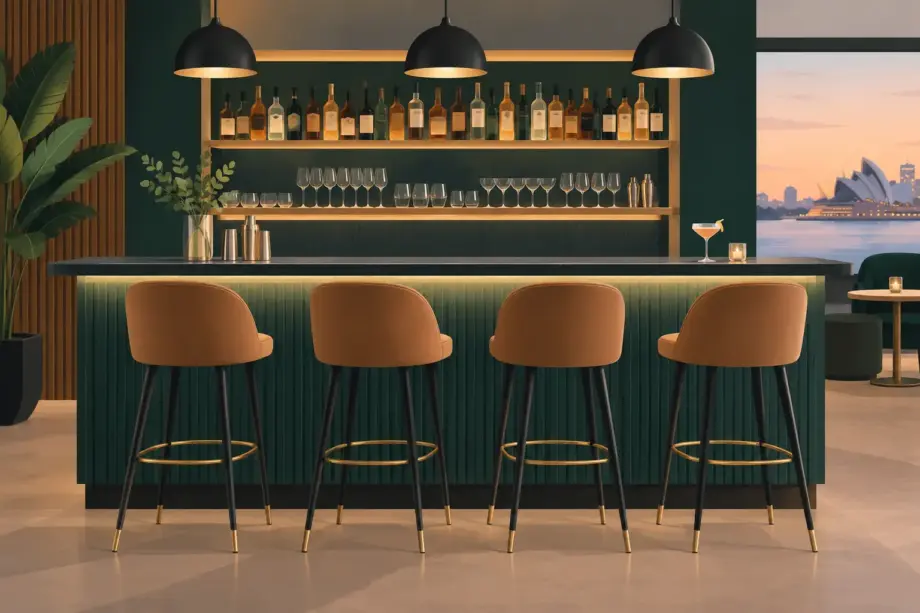
Stools do not need to match every chair in the venue, but they should belong to the same visual story. A black powder-coated frame may tie into shelving, pendant lights and table bases. A timber seat can echo wall battens or joinery. Upholstery can pick up the colour of banquettes without making the room feel overly coordinated.
Think about the view from several angles. From the entry, the rear of the stool may be more visible than the seat. From behind the bar, staff will see the legs and bases all night. Choose a design that looks considered from each perspective, especially in open-plan venues where the bar is a focal point.
For projects that need to move quickly, Furniture Pro Australia can help venue buyers compare commercial stool styles across materials, heights and hospitality applications. Selecting from available stock can keep a refurbishment or opening schedule on track without compromising the finished look.
The strongest choice is usually the stool that guests barely notice because it feels right: easy to sit on, appropriately spaced, stable underfoot and visually at home in the room. Start with the bar dimensions and service pattern, then let the material and silhouette bring the cocktail experience into focus.