



Sunloungers vs Outdoor Daybeds for Venues
A pool deck can look beautifully styled at opening time and still fail by lunchtime if the furniture does not suit how guests actually use the space. The choice between sunloungers vs outdoor daybeds affects more than appearance. It shapes guest turnover, poolside capacity, staff workload, cleaning routines and the overall value a venue can draw from every square metre.
For cafés, hotels, resorts, clubs and serviced accommodation, both options have a place. The right choice depends on whether the area needs individual relaxation, social lounging, premium bookable zones or a flexible mix of all three.
Sunloungers vs outdoor daybeds: the practical difference
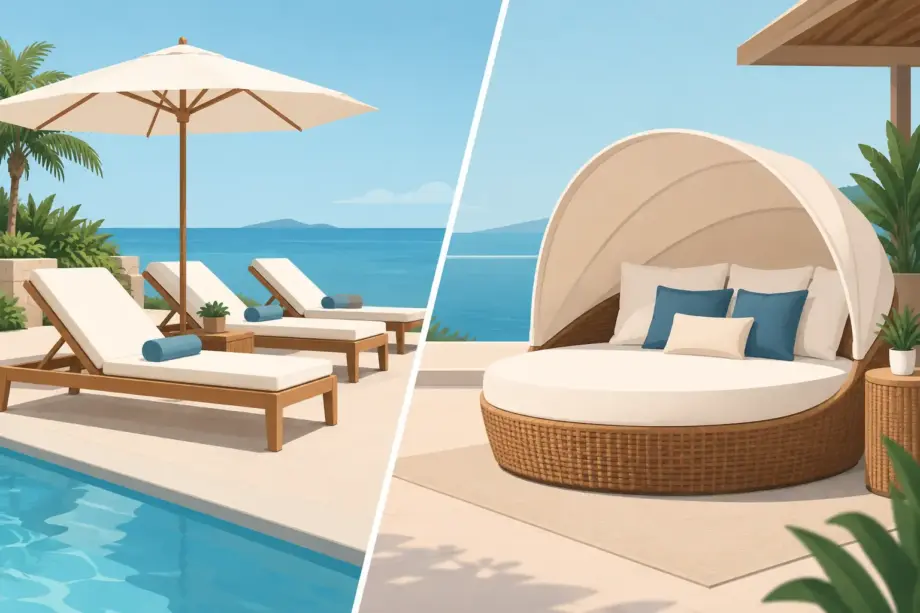
A sunlounger is designed for one person to recline, sit upright or lie flat. Most commercial models have an adjustable backrest, a slim footprint and a form that can be positioned in neat rows beside a pool, on a terrace or across a rooftop deck. They are a familiar choice for high-traffic leisure spaces because they make efficient use of the available area.
An outdoor daybed is larger, deeper and made for lingering. It may accommodate two or more guests, usually with a cushioned base and sometimes a canopy, hood or surrounding frame. Daybeds create an unmistakably premium look, particularly in resort-style settings, but they require more space and more deliberate planning.
Neither is automatically the better investment. A busy aquatic centre or hotel pool may need dozens of stackable sunloungers to serve daily demand. A boutique hotel may achieve a stronger commercial return by reserving a small number of daybeds for package upgrades, private bookings or VIP guests.
When commercial sunloungers make better sense
Sunloungers are the workhorse of outdoor hospitality furniture. They suit venues where capacity, circulation and straightforward upkeep matter as much as comfort. Along a pool edge, they let guests claim an individual spot without creating obstacles for staff, families or people moving between the water, bar and amenities.
Their smaller footprint is the major advantage. A well-planned layout can accommodate more guests while retaining clear access paths and enough spacing to avoid a crowded feel. This matters on narrow balconies, compact courtyards and pool decks where every position contributes to the venue’s operating capacity.
Commercial sunloungers are also easier to reconfigure. Staff can align them in rows before service, create paired settings for couples, move them for events or stack them away where the design permits. That flexibility is useful for multifunctional hospitality spaces that host breakfasts, functions and evening trade as well as daytime leisure.
Material selection should match the environment. Resin sunloungers are popular around chlorinated pools and coastal venues because they are lightweight, practical and easy to wash down. Aluminium frames offer a crisp, contemporary look with corrosion resistance when properly specified. Sling designs can dry quickly after rain or swimming, while cushioned options provide a more elevated guest experience but need a more considered storage and cleaning process.
Sunloungers are not only for pools. They work equally well on apartment common-area terraces, wellness facilities, holiday parks and club courtyards. For these settings, look for commercial-grade construction, UV-stable materials and components that are readily suited to repeated daily use.
Where outdoor daybeds add value
Outdoor daybeds change the mood of a space. Rather than simply providing somewhere to lie down, they establish a destination within the venue. A generously scaled daybed invites guests to settle in for longer, share the space and order another round rather than move on after a quick swim.
This makes them especially effective for resort pools, hotel cabanas, beach clubs, rooftop bars and premium accommodation. A daybed placed at the end of a pool, beneath a pergola or in a quieter garden zone can create a focal point that lifts photography, social content and the perceived quality of the whole outdoor setting.
For venues with a booking model, daybeds can be commercially valuable. They may form part of a minimum-spend package, a day-pass inclusion or a private-function arrangement. In that case, the furniture is not simply a cost of fit-out. It becomes part of the guest offer.
The trade-off is space. A daybed that looks generous in a product image can dominate a compact deck once access clearances, side tables, umbrellas and service paths are allowed for. It is worth mapping the layout before purchasing, rather than selecting by style alone. Consider how guests will enter and leave the daybed, where wet towels will sit and whether staff can comfortably clear glassware and reset cushions.
Daybeds also demand closer attention to upholstery. Removable, outdoor-rated cushions simplify cleaning and help protect the investment through seasonal changes. Fabrics should be suited to Australian UV exposure, while frames need to withstand moisture, sunscreen, pool chemicals and regular cleaning. Covered storage for cushions is a practical inclusion in any operating plan.
Capacity, comfort and guest behaviour
The best selection starts with the behaviour you want to encourage. Sunloungers suit independent use and shorter stays. They give guests personal space, make capacity easy to manage and support a calm, orderly poolside atmosphere.
Daybeds support social use and longer dwell time. They appeal to couples, groups and guests seeking a more private experience. That can be excellent for food and beverage spend, but it may also reduce the number of guests the area can serve at peak times.
A mixed layout often delivers the strongest result. Use sunloungers as the main seating format, then place a limited number of daybeds in high-value positions: along a view line, beneath shade or in a more secluded corner. This gives the venue broad everyday capacity while adding a premium option without sacrificing the whole deck to oversized furniture.
For a hotel pool, this could mean rows of durable sunloungers paired with small side tables, plus two daybeds that can be booked by guests. For a rooftop bar, fewer daybeds may be appropriate if the outdoor zone is designed around group bookings and table service. The right balance comes from the venue’s revenue model, guest profile and available floor area.
Plan for operations, not just opening day
Outdoor furniture must work after the first week of trade. Before committing to either format, consider cleaning time, storage requirements, replacement cushions and the effort needed to reset the area between guests. Furniture that looks impressive but takes too long to maintain can create avoidable pressure for staff.
Sunloungers generally have the simpler routine. Smooth frames and sling surfaces can be wiped down quickly, and stackable models can make end-of-day pack-down more efficient. Daybeds require more detailed attention, particularly where loose cushions, covers and canopies are involved. Their comfort is part of the appeal, so flattened cushions, stained fabric or faded covers will be noticed quickly.
Weight is another practical consideration. Lightweight furniture is easier for staff to move, but it needs sufficient stability for exposed terraces and windy coastal sites. Heavier daybeds can feel substantial and luxurious, yet may be difficult to reposition for cleaning, functions or changing weather. Review the site conditions, including drainage, wind exposure and access from the loading area, before finalising the specification.
It is also sensible to keep finishes consistent with the broader venue. Neutral resin or aluminium sunloungers can support a clean contemporary pool setting, while timber-look frames and textured cushions suit warmer resort schemes. Daybeds can introduce colour and softness, but they should complement the dining furniture, umbrellas and landscaping rather than compete with them.
Choosing furniture built for Australian outdoor trade
Australian conditions are demanding. Strong sun, sudden rain, salt air and heavy guest use can quickly expose weak finishes and domestic-grade construction. For commercial projects, prioritise furniture designed for outdoor hospitality use, with durable frames, UV-resistant materials and warranties that support the intended application.
Availability matters too. When a venue is preparing for a reopening, seasonal rush or refurbishment, delays can affect revenue. Choosing from Australian-held stock helps keep installation schedules moving, while reliable dispatch and metro delivery options simplify the procurement process. Furniture Pro Australia supports commercial buyers with outdoor furniture selected for operational spaces, not just private backyards.
Ask practical questions before ordering: Will the furniture sit beside a chlorinated or saltwater pool? Can cushions be stored overnight? Does the layout meet access requirements? Are replacement parts or matching pieces available if the venue expands? These details protect visual consistency and reduce future purchasing headaches.
The strongest outdoor spaces do not force a choice based on looks alone. Use sunloungers where efficient capacity and easy daily operation lead the brief. Use daybeds where privacy, longer stays and premium positioning justify the footprint. Then let the layout, materials and service model turn that furniture into a space guests remember and staff can run with confidence.