


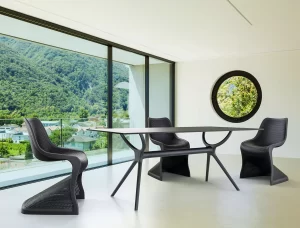

Best Commercial Outdoor Settings for Venues
A courtyard that looks sharp at opening time but wobbles by lunch service is not a commercial asset. The best commercial outdoor settings balance guest comfort, staff movement, venue character and the hard reality of Australian sun, rain, wind and heavy daily use. For cafés, pubs, clubs, resorts and workplace terraces, furniture must do more than fill an empty patio. It needs to earn its footprint.
What makes the best commercial outdoor settings?
A good-looking table and chair combination is only the starting point. Commercial outdoor furniture is chosen for repeated use by different people, frequent cleaning, shifting weather and busy bump-in or pack-down periods. Residential pieces may suit a private balcony, but they rarely offer the stability, material performance or warranty support expected in a trading environment.
Start with the way the space operates. A fast-paced café needs compact tables that turn over quickly and chairs staff can move without disrupting nearby diners. A club beer garden may need a mix of two-seat settings, larger group tables and bar-height options to encourage guests to stay longer. A hotel pool deck has different priorities again: sunloungers, side tables and low-maintenance materials that cope with sunscreen, wet bathers and chlorinated water.
The right setting is therefore not always the largest, softest or most decorative option. It is the one that supports the service model while presenting a consistent, considered look.
Choose materials for the site, not just the style
Australian outdoor areas can experience sharp temperature changes, driving rain and intense UV exposure in the same week. Material selection should reflect the local conditions as well as the venue’s design direction.
Powder-coated aluminium is a practical choice for many hospitality spaces. It is relatively lightweight, corrosion-resistant and easy to reposition for cleaning or functions. Aluminium chairs and table bases suit terraces, footpath dining and rooftop spaces, particularly where staff need to reset layouts regularly. Check that the coating and construction are suited to commercial outdoor use, as cheaper finishes can show wear sooner in high-contact areas.
Timber adds warmth and works beautifully in garden bars, coastal venues and cafés with a more relaxed aesthetic. However, it asks more of the operator. Exposure to direct sun and rain can affect appearance over time, so timber settings are best for covered spaces or businesses prepared to maintain them. If the venue cannot commit to an ongoing care routine, timber-look finishes or aluminium frames may be the more commercially sensible choice.
Polypropylene and moulded plastic chairs remain popular because they are durable, stackable and available in a broad range of colours. They are especially useful where flexibility matters, such as clubs, event spaces and casual dining venues. Look for commercial-grade construction and UV-stabilised materials rather than assuming all plastic furniture will perform equally outdoors.
For tabletops, compact laminate, treated timber, ceramic and weather-suitable composite finishes each have a place. Compact laminate is often selected for its clean appearance and easy-care surface, while ceramic can create a more premium dining experience. The trade-off is weight. A heavier top may feel more substantial in windy locations, but it can make furniture harder for staff to relocate. The table base must also be matched correctly to the size and weight of the top.
Do not overlook frames, feet and fixings
The details underneath a table can determine whether it remains useful after a busy season. Outdoor table bases should be stable on the actual flooring, whether that is pavers, decking, concrete or tiles. Adjustable feet are particularly valuable on uneven surfaces, helping prevent the familiar rattle that frustrates guests and staff.
Consider stainless steel components, protective glides and quality welds where furniture will be exposed to moisture. In coastal areas, salt air places greater demands on finishes and hardware. Furniture should be assessed for the site rather than selected solely from a product image.
Plan layouts around service and spending
Outdoor seating can increase a venue’s capacity, but only if the layout remains comfortable and workable. Crowding in extra tables may lift the seat count on paper while creating bottlenecks, awkward access and a poorer guest experience.
Allow clear routes for staff carrying trays, guests using mobility aids and emergency access. A table layout also needs space for chairs to move back without blocking a thoroughfare. This becomes particularly important during peak periods, when guests arrive in groups and staff are clearing tables quickly.
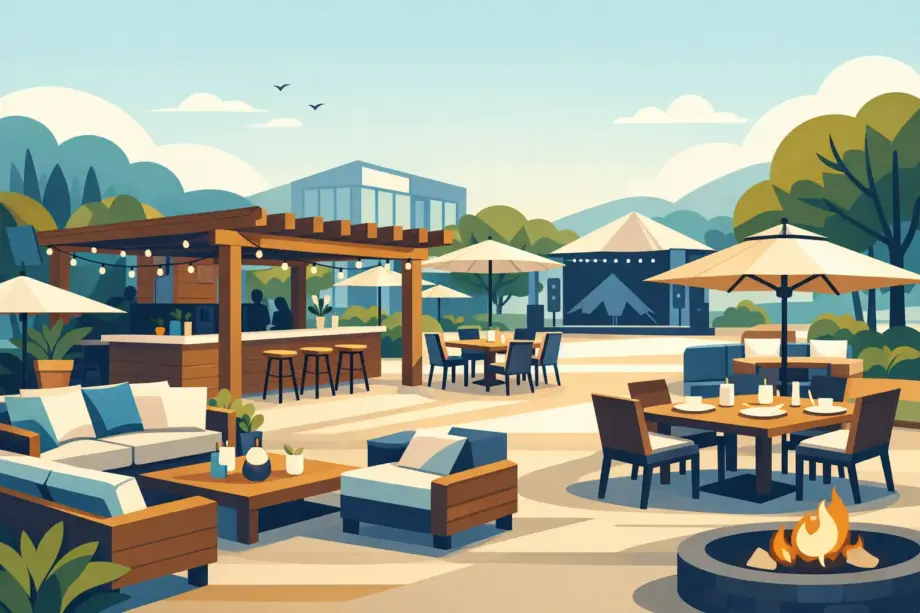
Think in zones rather than lining up identical settings across the entire area. Two-person tables near the edge can suit coffee catch-ups and quick meals. Larger tables work well for family groups and after-work gatherings. Bar tables can activate a rail or view line, while lounge settings provide a slower, more relaxed option for cocktails, waiting areas or poolside service.
A mixed layout creates choice, but it still needs visual discipline. Repeating key materials, frame colours or upholstery tones gives different furniture types a coherent finish. For example, black aluminium dining chairs, matching bar stools and neutral outdoor lounges can create clear zones without making the space feel disjointed.
Match table sizes to the menu
Tabletop size should support what guests are likely to order. A small round café table may be ideal for two coffees and a pastry, but it becomes frustrating when breakfast plates, water glasses and a laptop all compete for space. Full-service dining usually benefits from more generous tops, while bars may prioritise smaller, high-turnover settings.
This is also where table shapes matter. Round tables soften compact spaces and make conversation easy, but square tables are simpler to combine for larger bookings. Rectangular communal tables suit social venues and functions, provided the seating circulation is planned carefully.
Build flexibility into the furniture mix
Outdoor spaces are rarely used the same way every day. A weekend function, a wet-weather shift indoors or a large group booking can quickly change the ideal layout. Stackable chairs, nesting tables and lightweight but stable frames give managers options without needing a separate furniture store room full of mismatched pieces.
For venues with regular events, consider which items can be moved by one staff member and which require two people. Furniture that is too heavy will be left in place, even when the layout should change. Furniture that is too light may become a safety issue in exposed areas. The best answer often sits in the middle: commercial-weight pieces that are manageable for staff and suitable for the site.
Outdoor umbrellas, bases and shade structures should be considered alongside the settings, not after them. Shade affects where guests choose to sit, how long they stay and how furniture surfaces age. In windy positions, umbrella selection must be conservative and safety-led. There are sites where fixed shade or no umbrellas at all is the better decision.
Buy for whole-of-life value
The lowest upfront price is not always the lowest operational cost. Replacement chairs, unstable table bases, faded finishes and difficult cleaning can quickly remove any initial saving. For commercial buyers, value comes from a setting that remains presentable, safe and functional through regular service.
Before placing an order, confirm dimensions, seat heights, stackability, weight, care requirements and warranty coverage. Ask how the pieces will arrive, whether assembly is required and whether stock is available for the quantity needed. Consistent stock access matters when fitting out multiple areas or replacing damaged items later.
It is also worth ordering with maintenance in mind. Can staff wipe down the surfaces between sittings? Are cushions removable or protected from unexpected rain? Will replacement parts or matching pieces be available if the venue expands? These are procurement questions, but they directly affect the customer-facing result.
Furniture Pro Australia helps businesses select commercial-grade outdoor chairs, tables, lounges, stools and sunloungers with the practical support that busy fit-outs require, including Australian-held stock, dispatch options and after-sales service.
Create an outdoor area guests choose first
The strongest outdoor settings do not merely add seats. They give guests a reason to choose the terrace over a table inside, whether that is a comfortable morning coffee spot, a lively beer garden table or a calm poolside lounge. Select materials that suit the exposure, build a layout that lets staff work efficiently and choose a furniture range that can adapt as trade changes. When those decisions are made early, the outdoor area becomes a dependable part of the venue rather than a seasonal compromise.