



Do Metal Tables Rust in Australian Outdoor Areas?
A café courtyard can look immaculate at handover, then develop rust marks around table legs after one wet season. For venue operators and fit-out teams, the question is not simply, “do metal tables rust?” It is whether the table material, finish and maintenance plan suit the exposure your space actually receives.
Metal tables can rust, but not all metals rust in the same way, and many commercial tables are designed with protective finishes that make them highly suitable for outdoor use. The key is choosing for the conditions: a covered city laneway, poolside terrace and beachfront beer garden place very different demands on furniture.
Do metal tables rust outdoors?
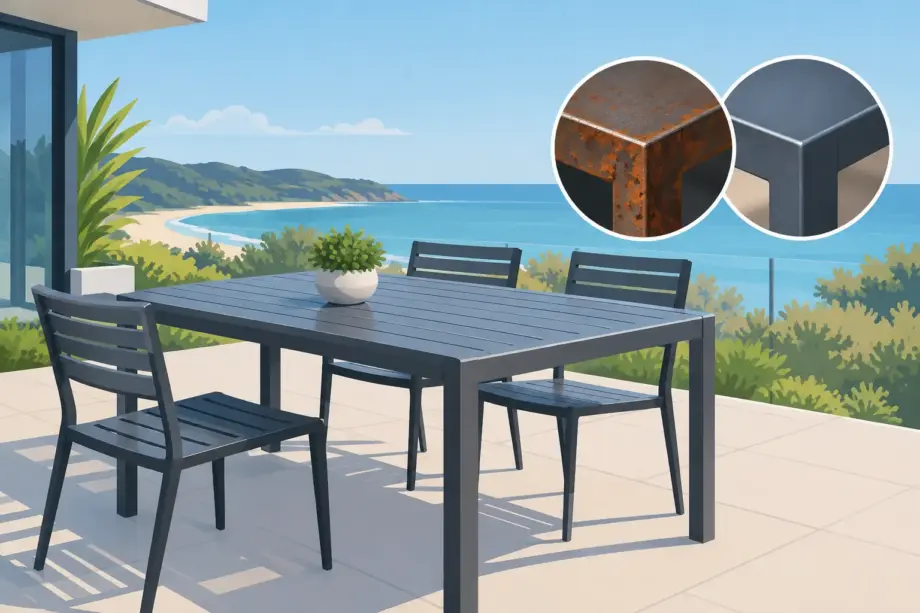
Rust is the orange-brown corrosion that forms when iron or steel reacts with oxygen and moisture. Standard untreated steel is particularly vulnerable. Water settles on the surface, finds a scratch, chip or exposed join, and corrosion can begin beneath the coating.
That does not mean metal is the wrong choice for outdoor hospitality furniture. Metal remains a popular option because it delivers clean lines, stability and a commercial look that works across cafés, restaurants, clubs and office breakout areas. It also gives designers a wide choice of colours, profiles and table base styles.
The practical distinction is between a metal table that has been selected and finished for its setting, and one that has simply been placed outside. A quality powder-coated steel table, correctly cared for under a covered patio, can provide years of service. The same table positioned in constant salt spray or where rainwater pools around its feet will need closer attention.
The metal and finish make the difference
When comparing commercial tables, look beyond the word “metal” in the product description. The base material and the protective treatment determine how it will perform over time.
Powder-coated steel
Powder-coated steel is widely used in commercial outdoor tables because it is strong, versatile and available in a broad range of colours. The powder coating creates a protective outer layer that helps keep moisture away from the steel beneath. It is an excellent choice for covered courtyards, alfresco dining zones and outdoor areas with normal weather exposure.
Its limitation is damage to the finish. Dragging tables over pavers, stacking them carelessly or knocking them against hard edges can chip the coating. Once bare steel is exposed, rust may form at that point. Inspect legs, feet, welds and underside edges regularly, as these are the areas most likely to be overlooked during daily cleaning.
Galvanised steel
Galvanised steel is steel treated with a zinc layer to improve corrosion resistance. It is often a sensible option for hard-working outdoor settings, particularly where a more industrial or contemporary hospitality aesthetic is part of the brief.
The zinc coating sacrifices itself gradually to protect the steel, so galvanised furniture generally handles moisture better than untreated steel. It is not completely maintenance-free, however. Coastal salt, trapped grime and surface damage still reduce its service life, and the material can develop a weathered appearance over time. That look may suit some venues, but it should be a deliberate design decision.
Stainless steel
Stainless steel does not rust as readily as ordinary steel because its chromium content forms a protective surface layer. It is a strong choice for food-service environments, outdoor commercial settings and areas where hygiene and easy cleaning are priorities.
Not every stainless steel grade performs equally near the coast. Lower grades can still stain or pit when exposed to airborne salt and chlorides. For tables in beachfront locations, on exposed balconies or near pools, ask about the grade of stainless steel rather than assuming the label alone guarantees corrosion resistance.
Aluminium
Aluminium does not form red rust because it contains no iron. Instead, it develops a thin oxide layer that protects the metal underneath. This makes aluminium tables a practical option for outdoor dining, particularly where staff need furniture that is easier to move, rearrange or pack down.
Aluminium is lightweight and corrosion-resistant, but it is not invincible. Powder-coated aluminium can still scratch, and lower-quality frames may dent under hard commercial use. For busy venues, assess the construction, leg profile and table base stability as carefully as the finish.
Australian conditions can change the answer
Australia’s climate is not one outdoor environment. Furniture that performs well in a sheltered Melbourne courtyard may face a very different workload in tropical humidity, intense UV or coastal salt air.
Near the ocean, salt deposits are the main concern. Even tables placed under cover can collect airborne salt, especially during windy weather. If it is not washed away, it holds moisture against the surface and accelerates corrosion on steel components, fasteners and damaged coatings.
In humid regions, moisture can linger for long periods, including underneath tabletops and inside hollow legs. In high-UV locations, finishes can fade or become less resilient over time. Areas that experience regular rain need a plan for drainage, as standing water around levelling feet or table bases is a common source of premature damage.
For a commercial buyer, this means selecting furniture for the most demanding conditions it will face, not for the best day of the year. A covered alfresco space may still need outdoor-rated tables if wind-driven rain reaches the furniture or if it is regularly washed down at close.
How to prevent rust on commercial metal tables
Good care is straightforward and far less costly than replacing a full set of tables before their time. Start with regular cleaning. Wipe down frames with mild soapy water and a soft cloth, then dry them rather than allowing water to sit in joints and crevices. Avoid abrasive pads and harsh chemicals that can damage powder coating or leave residues on stainless steel.
Schedule a quick monthly inspection for outdoor furniture, or more often in coastal locations. Look for chips, scratches, bubbling paint, loose foot caps, staining around welds and water held inside stacking points or frame joins. Addressing a small area of coating damage promptly can prevent a larger corrosion issue later.
Layout also matters. Do not position table legs where irrigation overspray hits them every morning. Keep furniture clear of drainage channels and avoid storing wet tables tightly together, as trapped moisture can mark finishes and affect stacking surfaces. If tables are moved between service periods, lift them where possible instead of dragging them across concrete or pavers.
For seasonal venues or spaces that close for extended periods, clean and dry furniture before storage. A dry, ventilated storage area is preferable to wrapping tables in non-breathable plastic, which can trap condensation against the frame.
Match the table to the operational setting
A restaurant choosing tables for a covered pavement dining area may prioritise powder-coated steel for its visual flexibility and solid feel. A pool deck or rooftop bar might favour aluminium because it is corrosion-resistant and easier for staff to reposition. A coastal club with exposed outdoor seating may need marine-suitable materials, a more frequent cleaning programme and a realistic allowance for ongoing maintenance.
The tabletop matters too. A weather-resistant metal base paired with an unsuitable top can still create a poor ownership experience. Consider heat, UV, cleaning routines, table weight, stacking needs and how often the space is reconfigured for functions. Commercial furniture should support service flow as well as the visual character of the venue.
It is also worth considering replacement practicality. For larger fit-outs, choosing table ranges with consistent dimensions and available matching pieces can make it easier to expand the seating plan, replace damaged items and maintain a cohesive look as the business evolves.
When surface marks are more than cosmetic
Not every mark signals failure. Water spots, light staining and surface grime can often be removed with suitable cleaning. Rust that appears at a small chip in a powder-coated steel frame can usually be treated before it spreads, provided the area is cleaned, dried and repaired with an appropriate touch-up finish.
More serious warning signs include flaking coating, swelling around welded sections, unstable legs, deep pitting or corrosion that affects joints and fasteners. At that point, the issue is no longer just presentation. For customer-facing venues, a compromised table creates safety, cleanliness and brand-perception concerns.
Buying commercial-grade furniture from a supplier that understands hospitality and outdoor use gives procurement teams a clearer starting point. Check the intended application, warranty conditions and care guidance before placing an order, especially for exposed sites. The lowest upfront price can be poor value if the finish is not suited to the environment.
A metal table can be a long-lasting, design-led investment when its material suits the site and its finish is protected through normal venue care. Choose for exposure, clean it consistently and act on small signs of wear early – your outdoor area will stay welcoming, functional and ready for service.